Are Swappable Batteries the Future of E-Scooter Convenience?
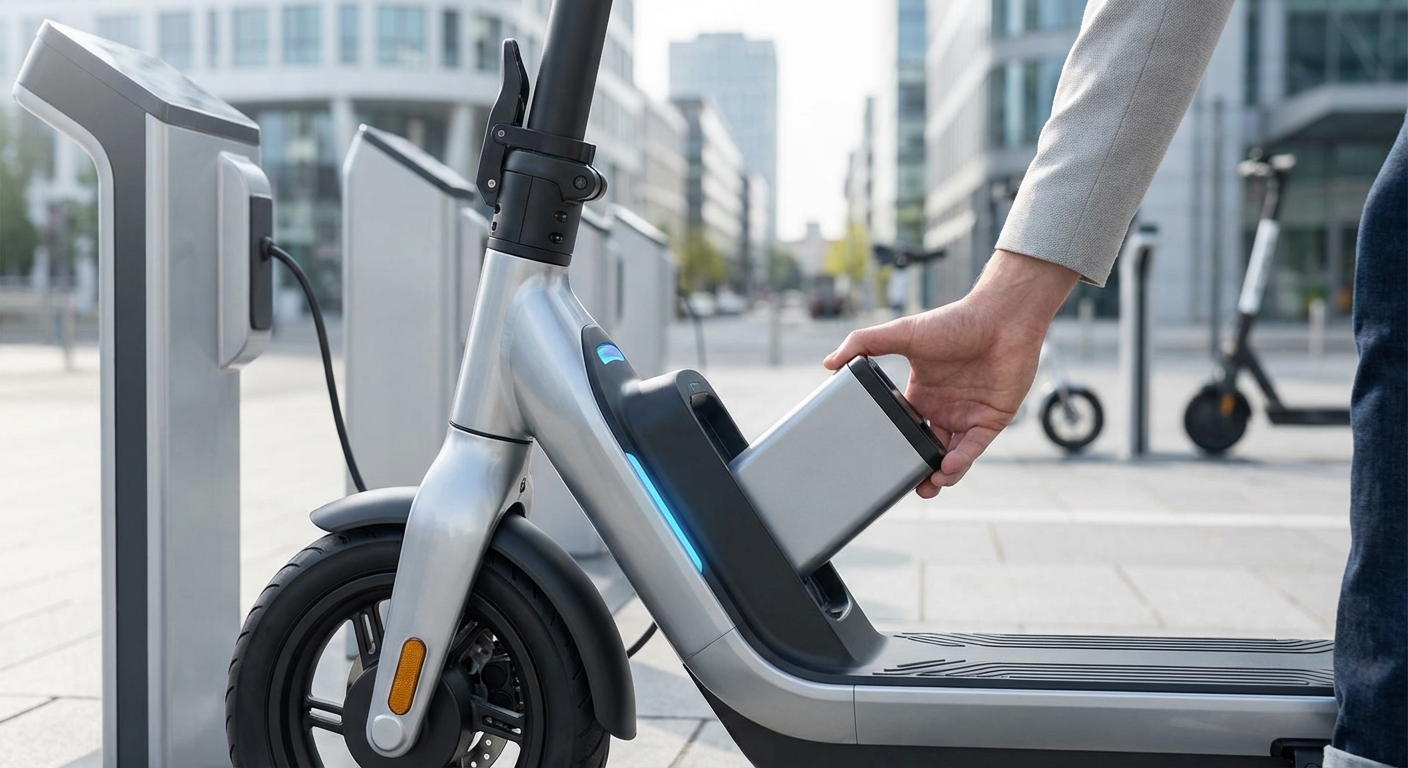
Battery anxiety hits hardest when you’re halfway through your commute and realize you forgot to charge overnight. Traditional e-scooters leave you stranded or scrambling for an outlet. Swappable batteries promise a different reality: pop out the dead pack, slide in a fresh one, and keep rolling.
Swappable batteries electric scooters let you exchange depleted power packs in seconds instead of waiting hours for a charge. This technology eliminates downtime for delivery riders and heavy commuters, though it adds weight and cost. Whether swappable batteries suit your needs depends on daily mileage, access to spare packs, and your tolerance for carrying extra equipment.
What makes swappable battery systems different
Fixed battery e-scooters force you to plug in and wait. Charge times range from two to eight hours depending on capacity.
Swappable systems change that equation completely.
You carry a spare battery or visit a swap station. The exchange takes 30 seconds. No cables, no waiting, no planning your day around charge cycles.
Most swappable designs use a locking mechanism on the deck or stem. You turn a key or press a release button, slide out the depleted pack, and insert a fresh one. The scooter recognizes the new battery instantly.
Some manufacturers build dual-battery systems. You can ride on one pack while the other charges at home. When the active battery drains, you swap them without stopping.
The technology mirrors what power tool users have done for years. Cordless drill batteries taught the industry that hot-swapping works.
Who actually benefits from swappable batteries
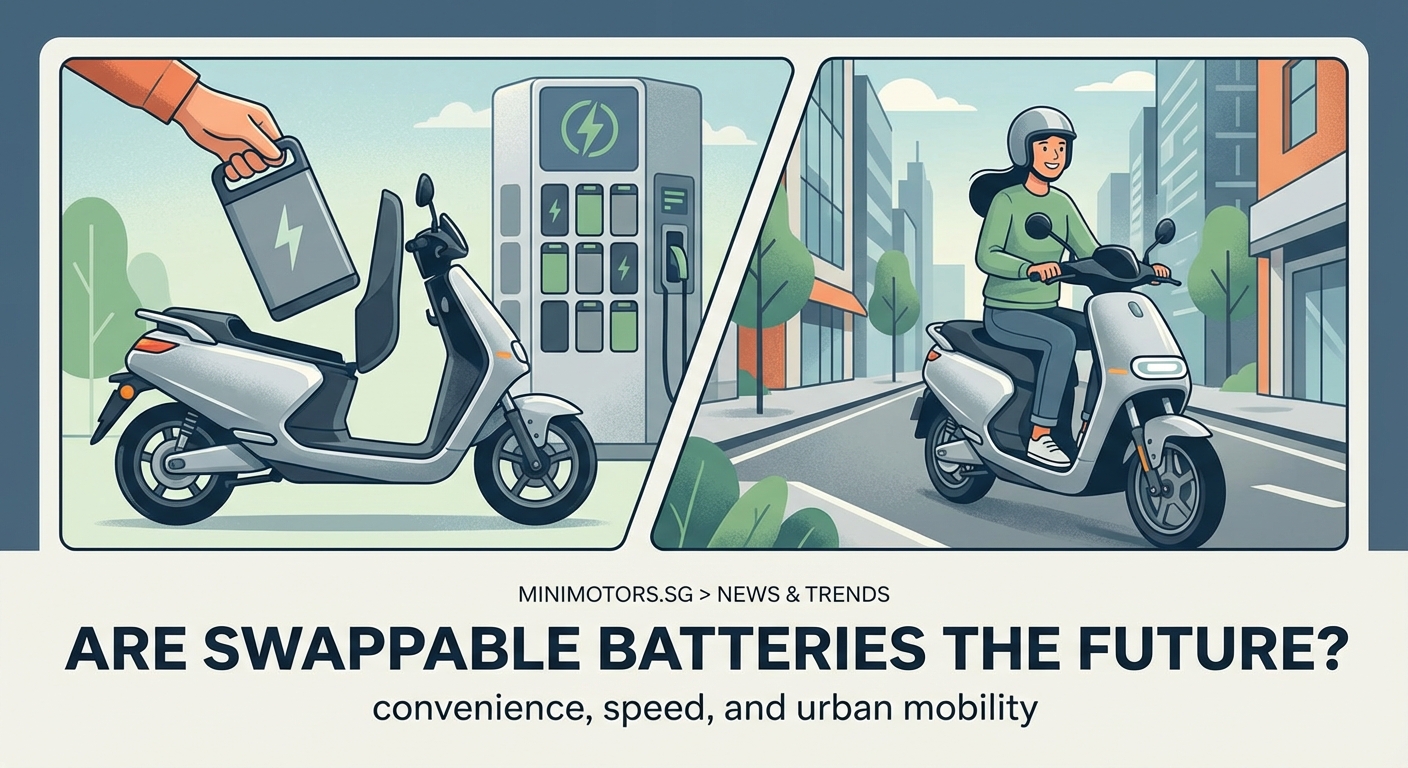
Delivery riders see the clearest advantage. They cover 50 to 100 miles per shift. A single battery rarely lasts that long.
With swappable packs, they carry two or three spares. Each swap takes less time than a bathroom break. No lost income waiting for a charge.
Long-distance commuters face similar math. If your round trip exceeds your scooter’s range, a spare battery solves the problem without adding a second charging session.
Shared scooter fleets use swappable systems differently. Operators collect depleted scooters, swap batteries on-site, and redeploy them immediately. This cuts operational costs and keeps more scooters available.
Casual riders gain less. If you only travel three miles to work, your battery lasts all week. Swapping adds complexity you don’t need.
The how long do e-scooter batteries actually last guide covers typical battery lifespans and when replacement becomes necessary.
Real costs beyond the sticker price
Swappable battery scooters typically cost $200 to $500 more than fixed-battery equivalents. That premium buys the quick-release hardware and more robust electrical connections.
Spare batteries add another $300 to $800 each. A 48V 20Ah pack costs more than many budget scooters.
You also carry extra weight. Each battery adds 8 to 15 pounds. Two spare packs mean hauling 30 pounds of batteries in your backpack.
Storage becomes a puzzle. Lithium batteries shouldn’t be left in extreme heat or cold. You need climate-controlled space for spares, which matters if you live in a small apartment.
Charging infrastructure multiplies. Instead of one charger, you might need two or three to keep multiple packs ready. Each charger draws power and takes up an outlet.
Insurance costs sometimes increase. Some providers charge more for scooters with removable batteries due to theft risk.
How to swap batteries without damaging your scooter
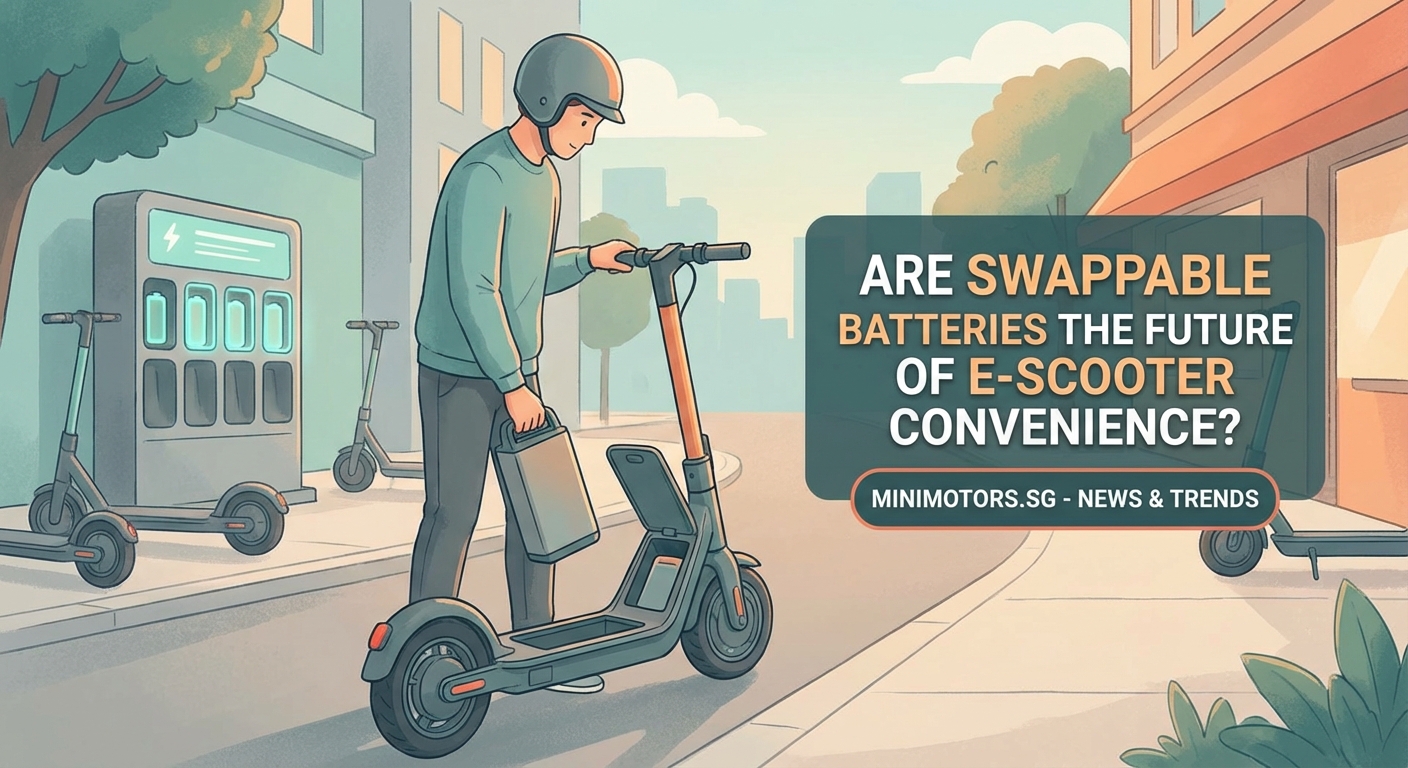
Follow this sequence every time:
- Power off the scooter completely before touching the battery
- Turn the key or press the release mechanism until you hear a click
- Grip the battery handle firmly and pull straight out without twisting
- Inspect the contacts on both battery and scooter for debris or corrosion
- Align the replacement battery with the guide rails
- Slide it in until it locks with an audible click
- Turn the key to the locked position
- Power on and check the display shows full charge
Never force a battery into place. If it doesn’t slide smoothly, check for obstructions or misalignment.
Clean the contact points monthly with a dry cloth. Moisture and dirt cause poor connections that reduce performance.
Store removed batteries at 50% to 60% charge if you won’t use them for more than a week. Full or empty storage degrades cells faster.
The 7 mistakes that are killing your e-scooter battery life article explains proper battery care in detail.
Comparing swappable versus fixed battery performance
| Factor | Swappable Batteries | Fixed Batteries |
|---|---|---|
| Downtime per charge | 30 seconds | 2 to 8 hours |
| Initial cost | $1,200 to $2,500 | $600 to $2,000 |
| Weight | 65 to 85 lbs | 45 to 65 lbs |
| Range flexibility | Unlimited with spares | Limited to single charge |
| Theft risk | Higher | Lower |
| Maintenance complexity | Moderate | Low |
Fixed batteries win on simplicity. You plug in, wait, and ride. No extra equipment, no battery management, no swapping logistics.
Swappable batteries win on flexibility. You control your uptime. Bad weather delays your commute? Swap in a fresh battery and keep going.
Battery degradation affects both types equally. Lithium cells lose capacity over 500 to 1,000 charge cycles regardless of form factor.
Fixed batteries force you to service the entire scooter when replacement time arrives. Swappable packs let you buy a new battery and install it yourself.
“The biggest advantage isn’t the swap speed. It’s the ability to replace a worn-out battery without tools or technical knowledge. That alone justifies the extra cost for riders who keep their scooters for years.” — Battery systems engineer with eight years in micro-mobility
What to look for in a swappable battery design
Connection quality matters most. Cheap designs use exposed contacts that corrode in humid climates. Look for sealed connectors or gold-plated contacts.
Locking mechanisms should require deliberate action. A battery that pops out from vibration creates a safety hazard. Test the lock before buying.
Battery management systems need to communicate with the scooter. The display should show accurate charge percentage, not just a vague estimate.
Handle design affects daily use. A molded grip beats a thin strap. You’ll carry these batteries often.
Weather sealing protects the battery compartment. Water intrusion damages both the battery and scooter electronics. IP54 rating or higher provides adequate protection.
Weight distribution changes handling. A battery mounted low in the deck maintains stability. Stem-mounted batteries raise the center of gravity and make the scooter feel tippy.
Compatibility matters if you plan to upgrade later. Some manufacturers use proprietary packs that work only with their models. Others adopt standardized formats that fit multiple brands.
Battery swap stations and ecosystem challenges
Several cities tested public swap stations for e-scooters. Riders exchange depleted batteries for charged ones, similar to propane tank exchanges.
Most programs failed. The infrastructure costs exceeded revenue. Stations require real estate, electricity, security, and maintenance.
Taiwan’s Gogoro network succeeded with electric mooters but hasn’t translated to scooters. The battery size and usage patterns differ too much.
Private swap networks work better. Delivery companies install stations at their hubs. Riders swap batteries between shifts.
Home charging remains the dominant model. You need your own spare batteries, which brings us back to the cost problem.
The 5 breakthrough battery technologies that will change e-scooters forever piece covers emerging solutions that might solve these infrastructure gaps.
Theft and security concerns with removable batteries
A removable battery is a removable target. Thieves can grab a $500 pack in seconds.
Some manufacturers add keyed locks. Others use electronic locks that require a phone app to release. Neither system is foolproof.
The best protection is removing the battery whenever you park. That defeats the convenience of having a scooter ready to ride.
Some riders use a cable lock through the battery handle. This adds time to your parking routine but stops opportunistic theft.
Insurance typically covers battery theft if you have a comprehensive policy. Check your coverage before assuming protection.
Serial numbers help recovery but rarely lead to arrests. Stolen batteries usually get resold quickly through online marketplaces.
Practical tips for managing multiple batteries
Label each battery with a number or color code. Track charge cycles and performance for each pack separately. This helps you identify weak batteries before they fail mid-ride.
Rotate batteries evenly. Using one pack constantly while keeping another as backup causes uneven degradation. Swap which battery you use daily.
Charge batteries in a fireproof container. Lithium fires are rare but devastating. A metal ammo can or ceramic pot provides cheap protection.
Monitor voltage with a multimeter monthly. Batteries showing significantly lower voltage than others need replacement soon.
Keep one battery at 60% charge as an emergency backup. Don’t cycle this battery unless necessary. It will maintain capacity longer.
The how to store your e-scooter battery during winter or long breaks guide provides seasonal storage strategies.
Common problems and how to fix them
Battery won’t lock into place: Check for debris in the guide rails. Dirt or small stones prevent proper seating. Clean with compressed air.
Scooter doesn’t recognize new battery: Power cycle the scooter completely. Turn it off, wait 30 seconds, then power on. This resets the battery management system.
Reduced range after swapping: The new battery might have different charge characteristics. Let it complete a full charge cycle to calibrate the system.
Loose connection during rides: The locking mechanism may be worn. Tighten any adjustment screws or replace the lock assembly.
One battery drains faster than others: This indicates cell degradation. Retire that battery from daily use and keep it as a last-resort spare.
Charging error messages: Clean the battery contacts and charger pins with isopropyl alcohol. Oxidation causes false error readings.
Making the decision for your situation
Calculate your daily mileage first. If you ride less than 15 miles per day, a standard battery probably covers your needs. Swappable batteries add expense without benefit.
Riders covering 20 to 40 miles daily hit the sweet spot. One spare battery eliminates range anxiety without excessive cost.
Beyond 40 miles per day, you’re in professional territory. Multiple spare batteries become necessary, which means significant investment in both packs and charging equipment.
Consider your charging access. If you can charge at work, you might not need swappable batteries. If you live in a walk-up apartment with no outdoor outlets, swappable batteries solve a real problem.
Think about your scooter’s expected lifespan. If you replace scooters every two years, fixed batteries work fine. If you plan to keep the same scooter for five years, swappable batteries let you refresh capacity without replacing the entire unit.
The what is the average range of an electric scooter on a single charge article helps you match battery capacity to your commute distance.
Future developments in battery swapping technology
Standardization efforts aim to create universal battery formats. If successful, you could use the same batteries across multiple scooter brands.
Faster charging reduces the swapping advantage. Batteries that charge in 20 minutes eliminate most of the convenience gap.
Solid-state batteries promise higher energy density. You’d get the same range from a smaller, lighter pack, making spares more practical to carry.
Wireless charging mats could let you top up while parked at coffee shops or offices. This reduces the need for spare batteries entirely.
Battery rental services might emerge. Pay a monthly fee and exchange depleted batteries at convenience stores, similar to phone charging kiosks.
The how AI and IoT are making e-scooters smarter and safer piece covers how connected features might optimize battery usage.
Why this matters for your next scooter purchase
Swappable batteries solve a specific problem: extended range without extended charging time. They work brilliantly if that’s your problem.
For most urban commuters, the added cost and complexity outweigh the benefits. A fixed battery scooter with adequate range and a workplace charging option serves you better.
The technology keeps improving. Lighter batteries, better locking systems, and lower costs make swappable batteries more practical each year.
Your decision should match your actual riding patterns, not theoretical scenarios. Track your current mileage for two weeks before choosing. Real data beats assumptions.
If you’re still researching your options, the how to choose your first electric scooter guide walks through all the major decision points. Battery type is just one factor among many that determine whether a scooter fits your life.
