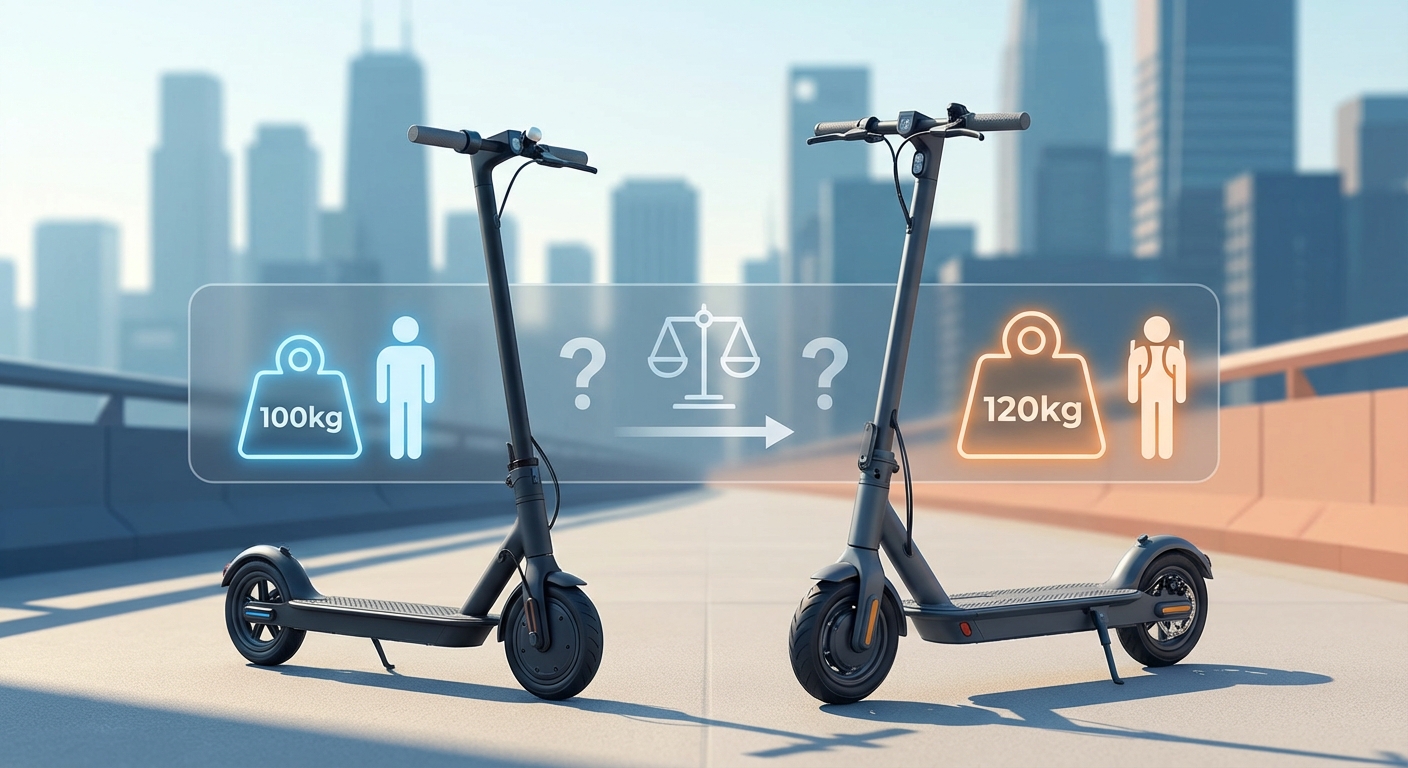
Why Do E-Scooters Have Different Weight Limits and Does It Really Matter?
Weight limits on electric scooters aren’t just arbitrary numbers printed in a manual. They’re engineering thresholds that determine whether your ride will feel smooth and responsive or sluggish and dangerous. If you’ve been eyeing a scooter but worry your weight might be too close to the limit, or if you’re already riding one and noticing performance issues, understanding what these numbers actually mean can save you from costly mistakes and potential accidents.
Electric scooter weight limits reflect the maximum load a scooter can safely carry without compromising structural integrity, motor performance, or battery efficiency. Exceeding these limits reduces range by up to 40%, accelerates wear on brakes and tires, and increases accident risk. Manufacturers set limits based on frame stress tests, motor capacity, and battery output. Riders within 10% of the limit should consider models with higher capacities to maintain optimal performance and longevity.
What determines an electric scooter weight limit
Manufacturers don’t pick weight limits randomly. They run stress tests on frames, measure motor torque output, and calculate battery drain under different loads. A scooter rated for 220 pounds has been tested to ensure the deck won’t crack, the stem won’t wobble, and the motor can still climb hills at that weight.
Frame material plays a huge role. Aluminum alloy frames typically support 220 to 265 pounds. Steel frames can handle 300 pounds or more but add significant weight to the scooter itself. Carbon fiber models offer strength without bulk but come with premium price tags.
Motor wattage directly correlates with weight capacity. A 250-watt motor struggles with riders over 180 pounds, especially on inclines. A 500-watt motor comfortably handles 220 pounds. Dual motor setups rated at 1000 watts or higher can support 300+ pounds while maintaining decent acceleration and hill climbing ability.
Battery voltage and amp hours matter too. Higher loads drain batteries faster. A 36V 10Ah battery might give a 150-pound rider 25 miles of range but only 15 miles for a 220-pound rider doing the same route.
Why exceeding weight limits damages your scooter
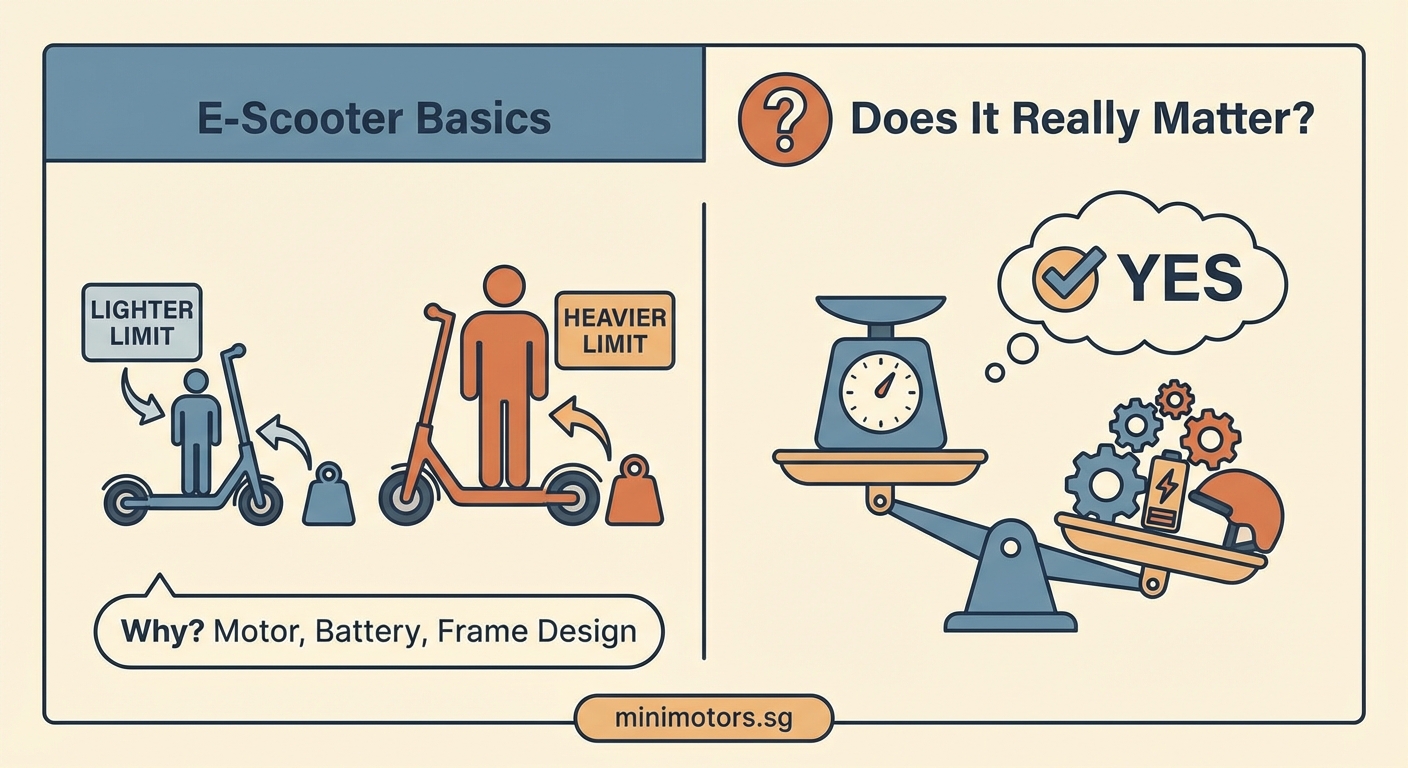
Riding over the weight limit doesn’t just void your warranty. It creates real mechanical problems that compound over time.
The deck flexes more than designed, creating microfractures in the metal. After a few months, these can turn into visible cracks near the folding mechanism or where the stem connects. One pothole at the wrong angle could snap the deck completely.
Brakes wear out faster because they’re working harder to stop more mass. Brake pads designed to last 1,000 miles might need replacement after 400. Disc rotors can warp from excessive heat. Electronic brakes overheat and lose effectiveness, leaving you with dangerously long stopping distances.
Tires take a beating too. Pneumatic tires develop sidewall bulges and are more prone to pinch flats. Solid tires compress beyond their elastic limit, creating permanent flat spots that make rides bumpy and unstable.
The motor runs hotter because it’s constantly working at maximum output just to maintain speed. This shortens the lifespan of the motor windings and can burn out the controller. Some scooters have thermal protection that cuts power when overheating, leaving you stranded mid ride.
Riding 20 pounds over the limit might seem harmless, but it’s like running your car engine in the red zone every day. Something will break, and it won’t be cheap to fix.
How weight affects real world performance
Performance degradation happens gradually, so you might not notice it at first. But the differences add up.
Acceleration: A scooter rated for 220 pounds will accelerate noticeably slower with a 230-pound rider. What should be a smooth takeoff from a stoplight becomes a sluggish crawl that frustrates both you and the cars behind you.
Top speed: Manufacturers list speeds tested with riders at or below the limit. Add 30 pounds and you might lose 3 to 5 mph off the top end. That 18 mph scooter becomes a 13 mph scooter.
Hill climbing: This is where excess weight hurts most. A 15-degree incline that should be manageable becomes impossible. The motor bogs down, speed drops to walking pace, and you might have to kick push or get off entirely.
Range: Extra weight can cut your range by 25% to 40%. A scooter advertised with 20 miles of range might only give you 12 to 15 miles. Plan your commute wrong and you’ll be pushing a dead scooter home.
Ride quality: Suspension systems are tuned for specific weight ranges. Go over and the suspension bottoms out on every bump, transferring harsh impacts straight to your joints. Rides become uncomfortable and tiring.
Common weight limit ranges by scooter type
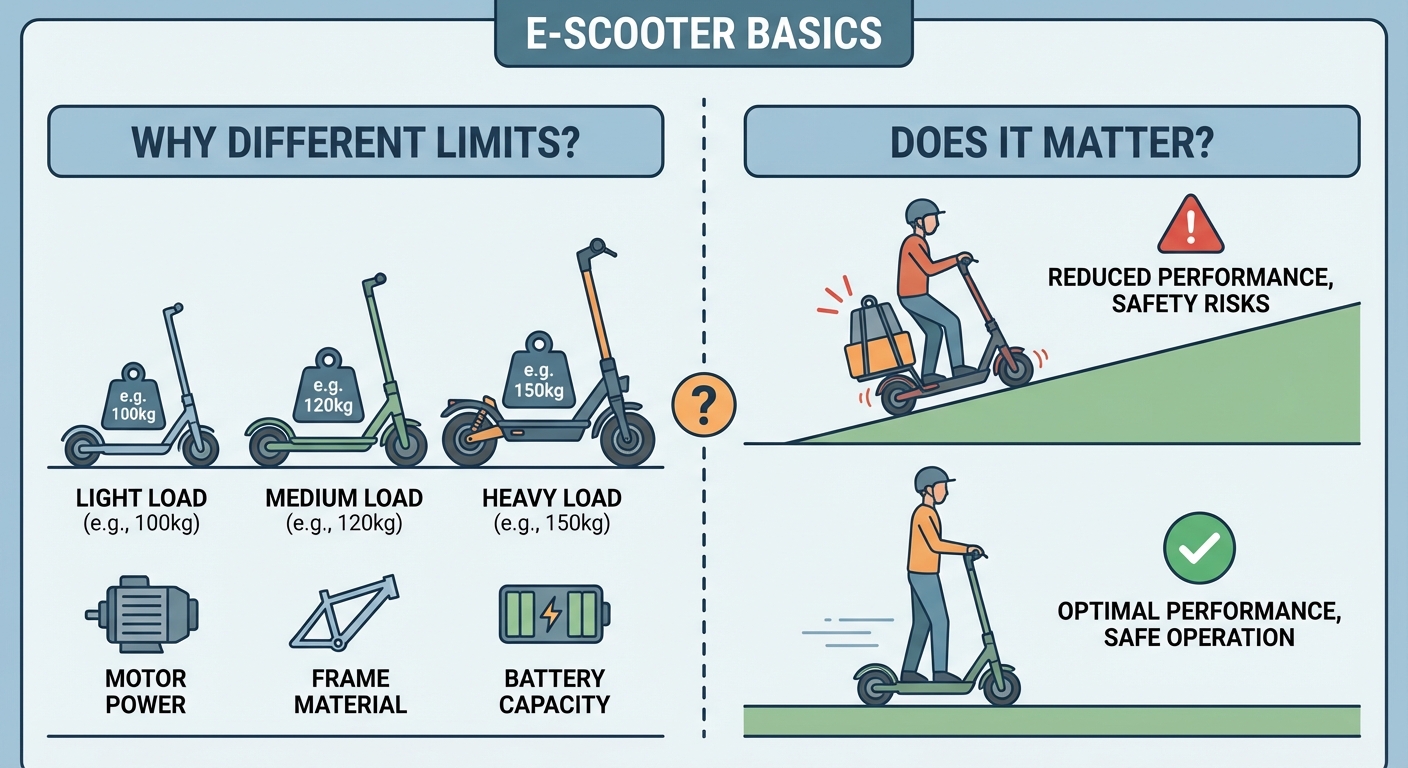
Different scooter categories have different weight capacities based on their intended use.
| Scooter Type | Typical Weight Limit | Motor Power | Best For |
|---|---|---|---|
| Budget commuter | 220 lbs | 250-350W | Lightweight riders, flat terrain |
| Mid-range commuter | 265 lbs | 500W | Average riders, mixed terrain |
| Performance commuter | 300 lbs | 800-1000W | Heavier riders, hills, cargo |
| Off-road | 330+ lbs | 1000W+ dual motor | Maximum durability, rough terrain |
| Seated scooters | 350+ lbs | 500-800W | Comfort priority, stability |
Budget models under $500 rarely exceed 220 pounds. They use cheaper materials and smaller motors to hit low price points. If you’re close to that limit, these scooters will disappoint you.
Mid-range scooters between $600 and $1,200 typically support 265 pounds. This covers most adult riders comfortably. The best e-scooters for heavy riders in this category use reinforced decks and more powerful motors.
Premium and off-road models can handle 300 to 350 pounds. They’re built like tanks with thick steel frames, dual suspension, and motors powerful enough to haul cargo. If you need maximum capacity, expect to pay $1,500 or more.
How to check if your weight is compatible
Manufacturers list weight limits in product specs, but you need to account for more than just body weight.
-
Calculate your total load: Add your body weight, clothing (about 3 to 5 pounds), backpack or bag (10 to 20 pounds), and any cargo you regularly carry. A 200-pound rider with a laptop bag and groceries might hit 230 pounds total.
-
Add a safety buffer: Aim to stay at least 10% below the stated limit. If a scooter maxes out at 265 pounds, treat 240 pounds as your real limit. This buffer preserves performance and extends component life.
-
Consider terrain: Riding on smooth pavement is easier on the scooter than rough roads with potholes. If your commute includes beat up sidewalks or dirt paths, you need even more buffer.
-
Factor in riding style: Aggressive riders who accelerate hard and brake late put more stress on components than smooth operators. Hard riding effectively adds 20 to 30 pounds of stress to the system.
You can find weight limits in the owner’s manual, on the manufacturer’s website, or stamped on a label near the deck. If you can’t find it anywhere, that’s a red flag about build quality.
What happens when you’re right at the limit
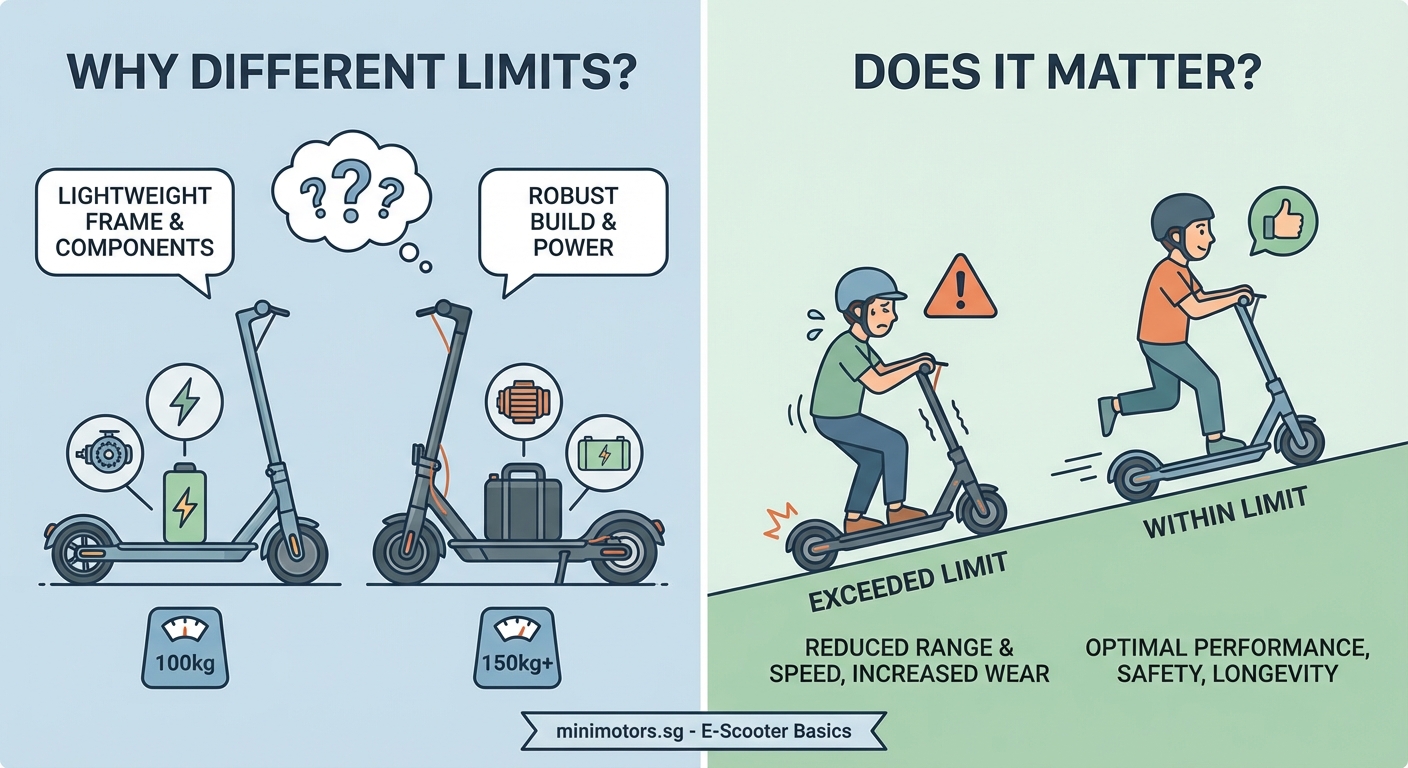
Being exactly at the weight limit isn’t ideal, even though it’s technically within spec.
Your scooter will work, but you’ll get the minimum advertised performance. Every spec sheet assumes ideal conditions with a rider in the middle of the weight range. At the upper limit, expect:
- Range reduced by 15% to 25%
- Top speed 2 to 4 mph slower
- Hill climbing ability significantly reduced
- Faster tire and brake wear
- More frequent maintenance needs
You’ll also notice the ride feels less stable. Heavier loads raise the center of gravity and increase momentum, making the scooter harder to control at speed and less responsive to steering inputs.
If you’re at the limit now but planning to lose weight, that’s fine. But if you’re at the limit and might gain weight, or if you want to add cargo capacity later, size up to the next tier.
Finding the right scooter for your weight
Choosing a scooter isn’t just about whether you fit under the limit. It’s about finding one that performs well at your weight.
For riders under 150 pounds: You have the most options. Even budget scooters will perform as advertised. Focus on features like portability and range rather than raw power.
For riders 150 to 200 pounds: Mid-range commuter scooters work great. Look for 500W motors and 265-pound limits. These give you room to carry cargo without performance loss.
For riders 200 to 265 pounds: Target scooters with 300-pound limits and 800W+ motors. This ensures strong performance even at your weight. Check reviews from heavier riders specifically.
For riders over 265 pounds: You need performance or off-road models with 330+ pound limits. Dual motors are almost mandatory. Expect to spend $1,500 minimum for a quality ride.
When choosing your first electric scooter, weight capacity should be one of your top three criteria alongside range and build quality.
Testing weight capacity before you buy
If possible, test ride a scooter before purchasing, especially if you’re near the weight limit.
Pay attention to these things during a test ride:
- Does acceleration feel strong or labored?
- Can you reach the advertised top speed on flat ground?
- Does the deck flex noticeably when you shift your weight?
- Do the brakes stop you confidently without squealing?
- Does the stem wobble or feel loose?
If the store won’t let you test ride, at least stand on the scooter and bounce a bit. The deck shouldn’t flex more than a quarter inch. The stem should feel rock solid without any play.
Read reviews from riders at your weight. Search for “weight limit” or “heavy rider” in review sections. Real world feedback from people your size is worth more than manufacturer marketing.
Weight limit myths you shouldn’t believe
Several misconceptions about weight limits circulate online. Let’s clear them up.
Myth: “Weight limits have huge safety margins built in, so going over is fine.”
Reality: While there is some engineering margin, it’s there for impact absorption and unexpected stress, not to let you regularly exceed the limit. That margin disappears fast with daily overloading.
Myth: “If the scooter doesn’t break immediately, the weight limit doesn’t matter.”
Reality: Damage accumulates over time. You might ride overweight for months before a critical failure happens, usually at the worst possible moment.
Myth: “Heavier riders just need bigger batteries, not stronger frames.”
Reality: Weight affects every component. Bigger batteries help with range but do nothing for frame stress, brake performance, or tire wear.
Myth: “You can upgrade components to increase weight capacity.”
Reality: The frame’s weight limit is fixed. You can’t upgrade your way to higher capacity without replacing the entire frame, which costs more than buying the right scooter initially.
Maintaining your scooter when you’re near the limit
If you’re riding near the weight limit, more frequent maintenance becomes essential.
-
Tire pressure: Check weekly. Underinflated tires with heavy loads fail faster and hurt performance. Run at the maximum PSI listed on the tire sidewall.
-
Brake inspection: Check pads monthly. Heavy riders need to replace pads 2 to 3 times more often than light riders.
-
Bolt tightness: Vibrations from heavy loads loosen bolts faster. Check all stem, handlebar, and deck bolts every two weeks.
-
Bearing condition: Wheel and stem bearings wear faster under heavy loads. Listen for grinding sounds and replace bearings at the first sign of roughness.
The ultimate e-scooter maintenance checklist becomes even more important when you’re pushing weight limits. Following it religiously can double your scooter’s lifespan.
Safety considerations for heavier riders
Weight affects safety in ways that aren’t always obvious.
Stopping distance: A 220-pound rider needs 20% to 30% more distance to stop than a 150-pound rider at the same speed. Leave bigger gaps between you and obstacles.
Stability at speed: Higher weight raises the center of gravity and increases momentum. Take turns slower and avoid sudden movements.
Crash severity: More mass means more force in a collision. Protective gear becomes even more critical. Always wear a helmet, and consider knee and elbow pads.
Component failure risk: Brakes, tires, and steering components fail more dramatically under heavy loads. Regular inspections catch problems before they become dangerous.
Understanding common e-scooter accidents and how to avoid them helps you ride defensively, especially important when weight affects your scooter’s handling.
How manufacturers test weight limits
Understanding the testing process helps you trust (or question) published limits.
Reputable manufacturers use standardized testing:
-
Static load tests: They place weights on the deck and measure deflection. The deck must support 1.5 to 2 times the rated limit without permanent deformation.
-
Dynamic stress tests: Machines simulate riding over bumps and potholes at the weight limit for thousands of cycles. Components must survive without cracks or failures.
-
Motor performance tests: They measure acceleration, top speed, and hill climbing with test weights matching the limit.
-
Brake tests: They verify stopping distance and brake fade under maximum load.
Cheap manufacturers skip some or all of these tests. That’s why unknown brands with suspiciously high weight limits at low prices often fail quickly. Stick with established brands that publish testing certifications.
Weight distribution and how it affects limits
It’s not just total weight that matters. How that weight is distributed makes a difference.
Carrying a heavy backpack raises your center of gravity more than the same weight in a basket mounted low on the deck. This makes the scooter less stable and more prone to tipping.
Cargo on the deck is better than cargo on your back for stability, but it concentrates weight in one spot and can stress the deck more than evenly distributed body weight.
Rider height matters too. Taller riders have a higher center of gravity, making the scooter feel less stable at the same weight as a shorter rider.
If you regularly carry cargo, choosing the right backpack for e-scooter riding helps distribute weight better and improves your riding experience.
Future technology and weight capacity improvements
Newer technologies are pushing weight limits higher without adding bulk.
Advanced materials: Carbon fiber composites and aerospace-grade aluminum alloys offer better strength-to-weight ratios. Expect future mid-range scooters to support 300+ pounds at weights under 40 pounds.
Motor efficiency: Newer motor designs produce more torque per watt, meaning smaller motors can handle heavier loads. This reduces weight and battery drain.
Battery density: As batteries pack more energy into smaller packages, scooters can carry heavier riders farther without increasing battery size or weight.
Smart load management: IoT sensors in e-scooters can detect rider weight and automatically adjust power delivery, regenerative braking, and suspension settings for optimal performance.
Within two years, expect most quality commuter scooters to support at least 300 pounds as standard, making weight concerns less limiting for more riders.
Making weight limits work for you
Weight limits aren’t dealbreakers. They’re just one factor in finding the right scooter for your needs.
If you’re close to common limits, spending extra on a higher-capacity model pays off in performance, safety, and longevity. The difference between a 220-pound and 300-pound capacity scooter might only be $300, but it could mean the difference between a scooter that lasts two years and one that lasts five.
Be honest about your weight and riding needs. Trying to squeeze by on a scooter that’s barely adequate will leave you frustrated and potentially unsafe. Size up when in doubt.
Remember that weight is just one consideration. Top features to look for when buying a premium electric scooter include build quality, range, and safety features that matter just as much as raw weight capacity.
The right scooter for your weight exists. Take the time to find it, and you’ll enjoy years of reliable, fun riding instead of constant repairs and disappointing performance.
