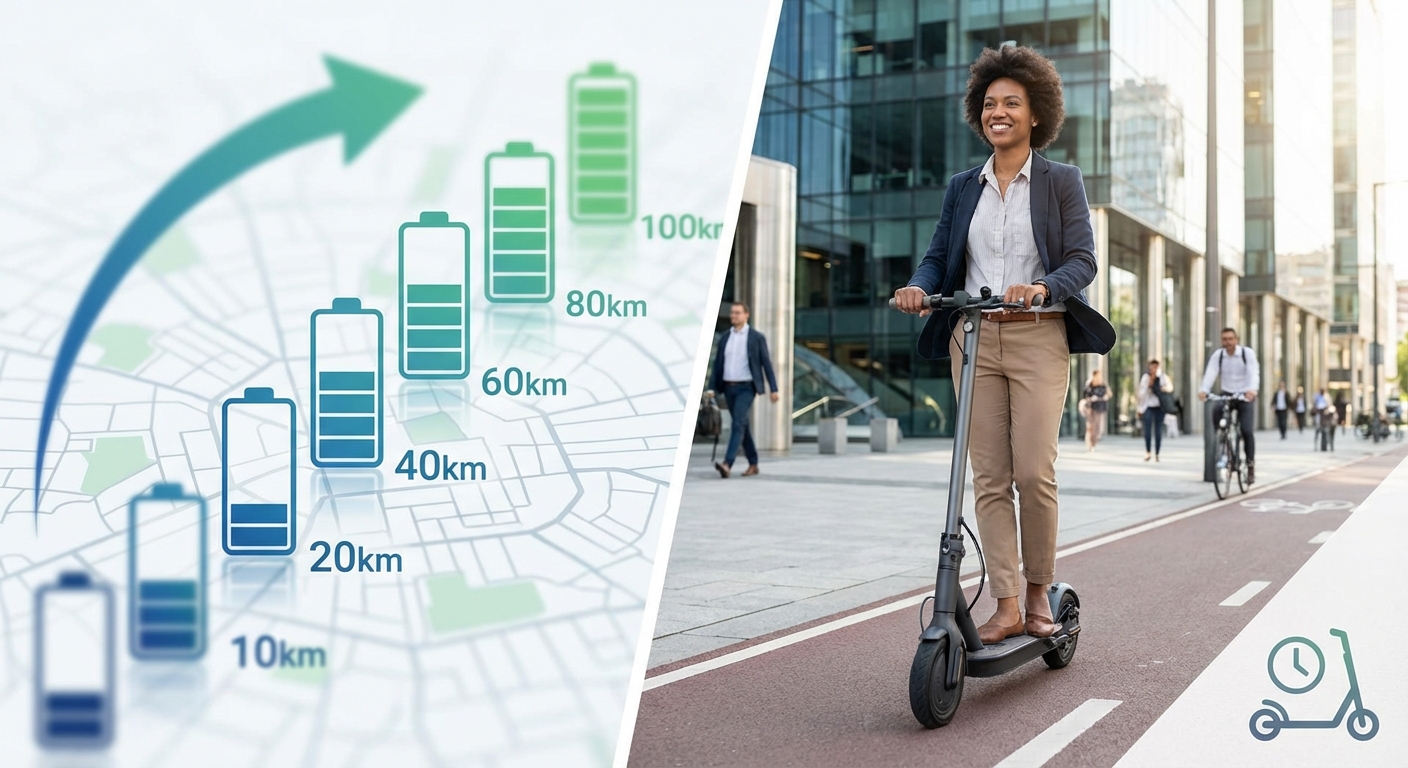
What’s the Best E-Scooter Range for Your Daily Commute?
You’re standing at the train station, watching the clock tick closer to 9 AM, knowing you’ll be late again. The bus is stuck in traffic two blocks away. Your car is parked in a garage that costs more than your lunch budget for the month. There has to be a better way to get to work.
Choosing the best electric scooter for commuting depends on your daily distance, terrain, and storage needs. Short commutes under 5 miles need 15-20 mile range scooters. Medium commutes of 5-10 miles require 25-35 mile range models. Long commutes over 10 miles demand 40+ mile range with dual motors. Match your scooter’s capabilities to your actual route, not just the advertised specs.
Understanding Your Actual Commute Distance
Most people overestimate how far they actually travel to work.
Your round trip might feel like forever, but it’s probably shorter than you think. Pull up your mapping app and measure the actual distance from your front door to your office entrance. Include any detours you take for coffee or to avoid construction.
Add 20% to that number for real-world routing. You won’t always take the most direct path. Weather, road closures, and spontaneous errands change your route.
Here’s what matters: battery range advertised on the box assumes perfect conditions. Flat roads. No wind. A 150-pound rider. Room temperature. Your real range will be 60-80% of the advertised number.
A scooter that claims 30 miles of range will give you 18-24 miles in actual use. That’s why matching your scooter to your commute distance is critical, not aspirational.
Range Categories That Match Real Commutes
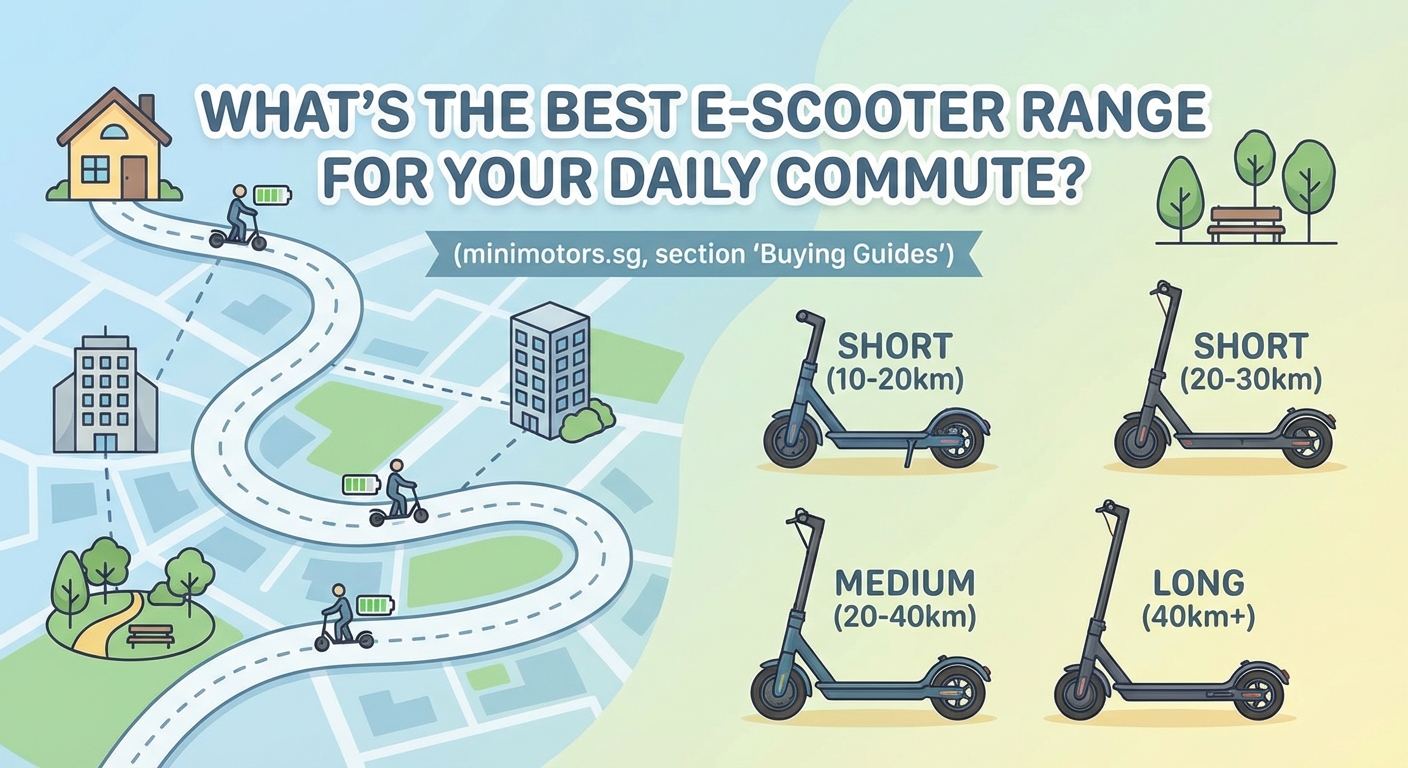
Different commute lengths need different battery capacities.
Short commute scooters (15-20 mile range):
– Best for round trips under 5 miles
– Lighter weight for carrying upstairs
– Faster charging times (2-4 hours)
– Lower price point ($300-$600)
– Perfect for last-mile connections to transit
Medium commute scooters (25-35 mile range):
– Handles round trips of 5-10 miles comfortably
– Still portable but heavier (35-45 pounds)
– Charging takes 4-6 hours
– Mid-range pricing ($600-$1,200)
– Good for full door-to-door commutes
Long commute scooters (40+ mile range):
– Covers round trips over 10 miles with buffer
– Heavy builds (45-65 pounds)
– Long charging times (6-8+ hours)
– Premium pricing ($1,200-$3,000+)
– Built for replacing car commutes entirely
Most urban commuters fall into the medium category. Their actual needs sit around 8-12 miles of daily riding.
Motor Power and Hill Performance
Range isn’t the only spec that matters for commuting.
Your route probably has hills. Even gentle slopes drain batteries faster than flat ground. A 250W motor struggles on anything steeper than a parking garage ramp.
Here’s the power breakdown:
| Motor Power | Best For | Hill Capability | Typical Speed |
|---|---|---|---|
| 250-350W | Flat routes, under 150 lbs | Struggles on 10%+ grades | 15 mph |
| 500-600W | Mixed terrain, average riders | Handles most city hills | 18-20 mph |
| 800-1000W | Hilly routes, heavier riders | Climbs steep grades easily | 25+ mph |
| Dual motor | Long distances, performance | Conquers any urban hill | 30+ mph |
If you live in San Francisco, Seattle, or any city with serious elevation changes, you need at least 500W. Preferably more.
A 350W scooter will get you up the hill eventually. But you’ll arrive sweaty and late, and your battery will be drained.
For most commuters on relatively flat urban routes, a single 500W motor hits the sweet spot. You get good speed, decent hill climbing, and reasonable battery efficiency.
Weight and Portability Considerations
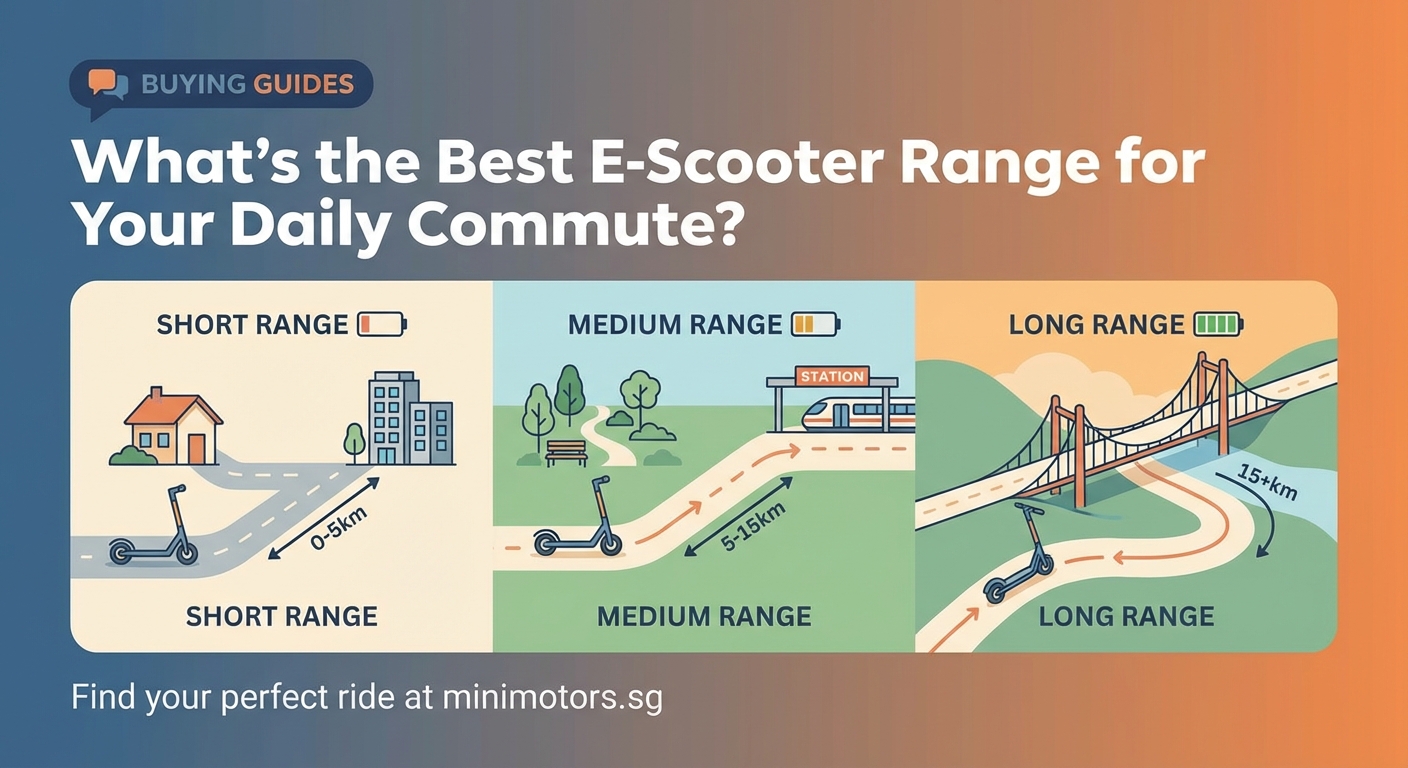
The best scooter in the world is useless if you can’t get it up your apartment stairs.
Think about your actual storage situation. Do you have:
– Ground floor access or an elevator?
– A desk or locker at work for storage?
– Public transit segments that require carrying?
– Stairs at either end of your commute?
Scooters under 30 pounds are genuinely portable. You can carry them one-handed for short distances. Models in the 30-40 pound range need two hands and frequent breaks. Anything over 45 pounds is a serious workout.
Some scooters fold in seconds. Others require tools or complicated sequences. Test the folding mechanism before you buy. Do it ten times in a row. That’s your Monday through Friday reality.
“I bought a 55-pound scooter with incredible range, thinking I’d just deal with the weight. After two weeks of hauling it up three flights of stairs twice a day, I sold it and got a lighter model. My commute is better now, even with slightly less range.” – Sarah, Seattle commuter
Consider where you’ll charge it. If you can’t bring it inside, you need weatherproofing and a good lock. Outdoor charging in rain or extreme cold damages batteries.
Tire Type and Maintenance Reality
Tires affect your daily experience more than you’d expect.
Pneumatic (air-filled) tires:
– Smooth ride over bumps and cracks
– Better traction in wet conditions
– Require regular pressure checks
– Can get flats (plan for repairs)
– More comfortable for longer rides
Solid tires:
– Zero maintenance
– Never go flat
– Harsher ride quality
– Less grip in rain
– Better for short, smooth commutes
If your route includes rough pavement, broken sidewalks, or frequent potholes, pneumatic tires are worth the maintenance. The comfort difference is substantial over 30 minutes of riding.
Solid tires make sense for perfectly paved bike lanes and short distances where comfort matters less than reliability.
Honeycomb tires split the difference but lean closer to solid tire performance. They’re marketing more than meaningful innovation.
Braking Systems for Daily Safety
You’ll use your brakes hundreds of times per commute.
Traffic lights. Pedestrians. Car doors opening. Dogs on leashes. Delivery trucks double-parked. Your brakes need to work instantly, every single time.
Electronic braking:
– Smooth and quiet
– Works well at low speeds
– Less effective in rain
– Minimal maintenance
– Often paired with regenerative charging
Disc brakes:
– Powerful stopping force
– Reliable in all weather
– Require occasional adjustment
– Can squeal when wet
– Best for higher speeds
Drum brakes:
– Consistent performance
– Protected from weather
– Heavier than other options
– Less powerful than disc
– Very low maintenance
The safest setup combines two different brake types. Electronic in front, disc or drum in rear. This gives you redundancy and better control.
Test the brakes at various speeds before committing to a model. Some scooters have mushy, delayed braking that feels dangerous in real traffic.
Weather Protection and IP Ratings
Your commute doesn’t pause for rain.
IP ratings tell you how waterproof your scooter actually is:
– IPX4: Light rain okay, avoid puddles
– IPX5: Rain riding safe, no submersion
– IPX6: Heavy rain fine, puddles okay
– IPX7: Can handle brief submersion
Most commuter scooters sit at IPX4 or IPX5. That’s fine for riding in rain but means you can’t leave it outside in a storm or blast it with a hose.
Water damage usually hits the battery compartment or display first. Even with good IP ratings, dry your scooter after wet rides. Water finds its way into folding mechanisms and charging ports.
If you live somewhere with frequent rain, consider getting waterproof covers and rain gear for both you and your scooter.
Cold weather affects range more than rain. Batteries lose 20-30% of their capacity below freezing. Your 25-mile scooter becomes an 18-mile scooter in winter.
Smart Features Worth Paying For
Apps and connectivity sound fancy but some features genuinely improve commuting.
Actually useful smart features:
– GPS tracking (for theft recovery)
– Battery percentage display (not just bars)
– Speed mode switching (adapt to conditions)
– Cruise control (reduces hand fatigue)
– Trip logging (track maintenance needs)
Marketing fluff you don’t need:
– RGB lighting systems
– Bluetooth speakers
– Excessive app customization
– Social sharing features
– Gamification elements
The most valuable smart feature is accurate battery monitoring. Knowing you have exactly 8.2 miles of range left is infinitely better than watching three bars drop to one unexpectedly.
Cruise control matters on longer commutes. Holding the throttle for 20+ minutes causes hand cramping. Being able to set a steady 15 mph and relax makes a real difference.
Some scooters let you limit top speed through the app. This helps preserve battery when you don’t need maximum performance. Riding at 15 mph instead of 25 mph can extend your range by 40%.
Suspension and Comfort Over Time
Your first test ride feels different from your 200th commute.
What seems like a minor vibration in a parking lot becomes genuinely painful after six months of daily riding. Your hands, wrists, and lower back take constant impact.
Front suspension only:
– Handles small bumps well
– Rear still transmits road shock
– Common on budget models
– Better than no suspension
Dual suspension:
– Smooths out rough roads significantly
– Adds weight and cost
– Essential for longer commutes
– Reduces fatigue dramatically
No suspension:
– Lightest and cheapest option
– Only viable on perfect pavement
– Exhausting on real city streets
– Not recommended for daily use
If your commute is over 15 minutes one way, dual suspension is worth every extra dollar and pound. The comfort difference compounds over time.
Adjustable suspension lets you tune for your weight and road conditions. Stiffer settings for smooth roads and speed. Softer settings for rough pavement and comfort.
Battery Longevity and Replacement Costs
Your scooter’s battery will degrade.
Most lithium batteries last 500-1,000 charge cycles before dropping to 80% capacity. If you charge daily, that’s 1.5 to 3 years of use.
A scooter with 30 miles of range when new will give you 24 miles after two years of daily charging. After four years, maybe 20 miles. This is normal physics, not a defect.
Replacement batteries cost $150-$600 depending on capacity. Some manufacturers make replacement easy. Others require sending the entire scooter in for service.
Before buying, research:
1. Battery replacement availability
2. Cost of replacement batteries
3. Whether you can do it yourself
4. Warranty coverage for battery degradation
Some brands offer battery warranties that guarantee 80% capacity for two years. Others offer nothing beyond the basic 90-day coverage.
Factor replacement cost into your total ownership calculation. A $500 scooter with a $300 battery replacement is actually more expensive than a $700 scooter with a $150 battery after three years of use.
Understanding how long e-scooter batteries actually last helps you plan for the real cost of ownership.
Deck Size and Riding Position
Your feet spend a lot of time on that deck.
Narrow decks (under 6 inches wide) force you to ride with feet in tandem. This gets uncomfortable quickly and makes balance harder.
Wide decks (7-9 inches) let you position your feet naturally. You can shift weight, adjust stance, and stay comfortable for longer periods.
Deck length matters for taller riders. If you’re over 6 feet, you need at least 20 inches of deck length to stand comfortably.
Some scooters have textured grip tape. Others use rubber mats. Both work, but grip tape provides better traction in rain and lasts longer.
Handlebar height should put your arms at a comfortable angle. Too low causes back pain. Too high reduces control. Adjustable stems solve this but add a potential failure point.
Test ride with your actual commuting gear. Backpack, work shoes, jacket. Your comfort in shorts and sneakers doesn’t predict your comfort in real conditions.
Storage and Security Options
Where will your scooter live when you’re not riding it?
At home:
– Wall mounts save floor space
– Keep away from temperature extremes
– Store at 50-80% charge for battery health
– Folded scooters fit in closets
At work:
– Check if your office allows indoor storage
– Some buildings ban batteries inside
– Bike rooms might have space
– Under-desk storage works for compact models
On the street:
– Never your first choice
– Requires serious locks (spend $100+)
– High theft risk in most cities
– Weather exposure damages components
If you must lock outside, use two different lock types. A U-lock through the stem and a cable through the wheels. Thieves come prepared for one lock type but rarely both.
GPS tracking helps recover stolen scooters but isn’t a substitute for good locks. Most tracking requires a monthly subscription and depends on the thief not finding and removing it.
Cost of Ownership Beyond Purchase Price
The sticker price is just the beginning.
First-year costs typically include:
– The scooter itself ($300-$3,000)
– Helmet and safety gear ($50-$150)
– Lock system ($50-$150)
– Insurance if required ($100-$300/year)
– Replacement tubes or tires ($30-$80)
– Brake maintenance ($20-$60)
Ongoing annual costs:
– Electricity for charging ($15-$30/year)
– Tire replacements ($60-$150)
– Brake pad replacement ($30-$80)
– General maintenance ($50-$150)
– Possible insurance ($100-$300)
Compare this to your current commute costs. If you’re spending $200/month on gas and parking, a $1,000 scooter pays for itself in six months.
Public transit passes often cost $80-$150 per month. A scooter eliminates that expense while giving you more flexibility.
The real savings come from time. If a scooter cuts 20 minutes off your daily commute, that’s 80+ hours per year. Value that however you want, but it’s substantial.
Common Mistakes First-Time Commuters Make
People buy the wrong scooter for predictable reasons.
Mistake 1: Buying for maximum range instead of actual needs
You don’t need 60 miles of range for a 6-mile commute. That extra battery capacity adds weight, cost, and charging time without benefit.
Mistake 2: Ignoring portability until after purchase
The scooter that looks manageable in the store feels like an anchor after three flights of stairs twice a day.
Mistake 3: Choosing based on top speed
You’ll rarely hit maximum speed in city traffic. Acceleration and hill climbing matter more than whether it can theoretically reach 30 mph.
Mistake 4: Skipping test rides in real conditions
Riding around a parking lot doesn’t reveal how it handles potholes, curbs, or wet pavement.
Mistake 5: Not researching local regulations
Some cities ban scooters on sidewalks. Others require helmets. Some limit motor power or top speed. Know the rules before buying.
Learning from common e-scooter accidents and how to avoid them prevents expensive mistakes.
Models That Actually Match Different Commutes
Here are real scooter categories for specific situations.
For 3-5 mile flat urban commutes:
– Look for 15-20 mile range
– 350-500W motor sufficient
– Prioritize weight under 30 lbs
– Budget $400-$700
– Single suspension acceptable
For 5-8 mile mixed terrain:
– Need 25-30 mile range minimum
– 500-750W motor recommended
– Weight 35-45 lbs acceptable
– Budget $700-$1,200
– Dual suspension preferred
For 8-12 mile hilly commutes:
– Require 35-40 mile range
– 800W+ or dual motors
– Weight 45-55 lbs expected
– Budget $1,200-$2,000
– Dual suspension essential
For 12+ mile or extreme conditions:
– Demand 50+ mile range
– Dual motors standard
– Weight over 55 lbs common
– Budget $2,000-$3,500
– Premium suspension required
Match your budget to your actual needs, not your aspirational ones. A reliable mid-range scooter beats an unreliable premium model.
Maintenance Schedule for Daily Commuters
Regular maintenance prevents breakdowns during your commute.
Weekly checks:
– Tire pressure (pneumatic tires)
– Brake responsiveness
– Lights and reflectors
– Folding mechanism tightness
– Visible damage or wear
Monthly maintenance:
– Deep clean the deck and frame
– Check brake pad wear
– Tighten all bolts and screws
– Inspect tires for damage
– Test all electronic functions
Quarterly service:
– Professional brake adjustment
– Bearing inspection and lubrication
– Electrical connection check
– Suspension tuning
– Battery health assessment
Keep a simple log of your maintenance. Note when you replace parts, adjust brakes, or notice new sounds. Patterns emerge that predict failures before they strand you.
Many commuters do basic maintenance themselves and use professionals for complex work. The ultimate e-scooter maintenance checklist breaks down what you can handle versus what needs expert help.
Legal Requirements in Your Area
Laws vary dramatically by location.
Some cities treat scooters like bicycles. Others classify them as motor vehicles. A few ban them entirely.
Common regulations to research:
– Helmet requirements (age-specific or universal)
– Sidewalk riding rules (often prohibited)
– Bike lane access (usually allowed)
– Speed limits (typically 15-20 mph)
– License or registration needs (rare but exists)
– Insurance requirements (increasingly common)
Fines for violations range from warnings to $200+ tickets. Know what’s legal before your first ride.
Some areas require lights and reflectors for night riding. Others mandate specific safety equipment. A few require audible warning devices like bells.
If you cross city or county lines during your commute, check regulations for each jurisdiction. What’s legal at home might not be legal at work.
Preparing for Your First Commute
Don’t make your first scooter ride your actual commute.
Practice on weekends when stakes are low. Learn your scooter’s handling, braking distances, and acceleration patterns.
Pre-commute practice checklist:
1. Ride your actual route on a Saturday
2. Identify problem areas (rough pavement, tight turns, busy intersections)
3. Time the journey to know realistic duration
4. Test your scooter’s range with your weight and route
5. Practice emergency braking from various speeds
6. Learn to navigate curbs and obstacles
7. Ride in different weather conditions
Start your first real commute 30 minutes earlier than you think necessary. You’ll encounter unexpected delays, take wrong turns, or need to adjust your route.
Bring a backup plan. Keep a transit card or ride-share app ready in case something goes wrong.
After a week, you’ll know your scooter’s quirks and your route’s challenges. That’s when commuting becomes routine instead of stressful.
Your Next Move
The best electric scooter for commuting is the one that matches your specific route, storage situation, and budget.
Stop comparing specs in isolation. Think about your actual Monday morning. Where will you store the scooter overnight? How many stairs are involved? What’s the weather like most days? How much time do you want to save?
A $600 scooter that perfectly fits your needs beats a $2,000 model that’s too heavy to carry or too powerful for your route.
Measure your commute today. Calculate your real range needs. Test ride options that match those numbers. Make your decision based on your life, not the spec sheet.
Your commute is about to get a lot more interesting.
