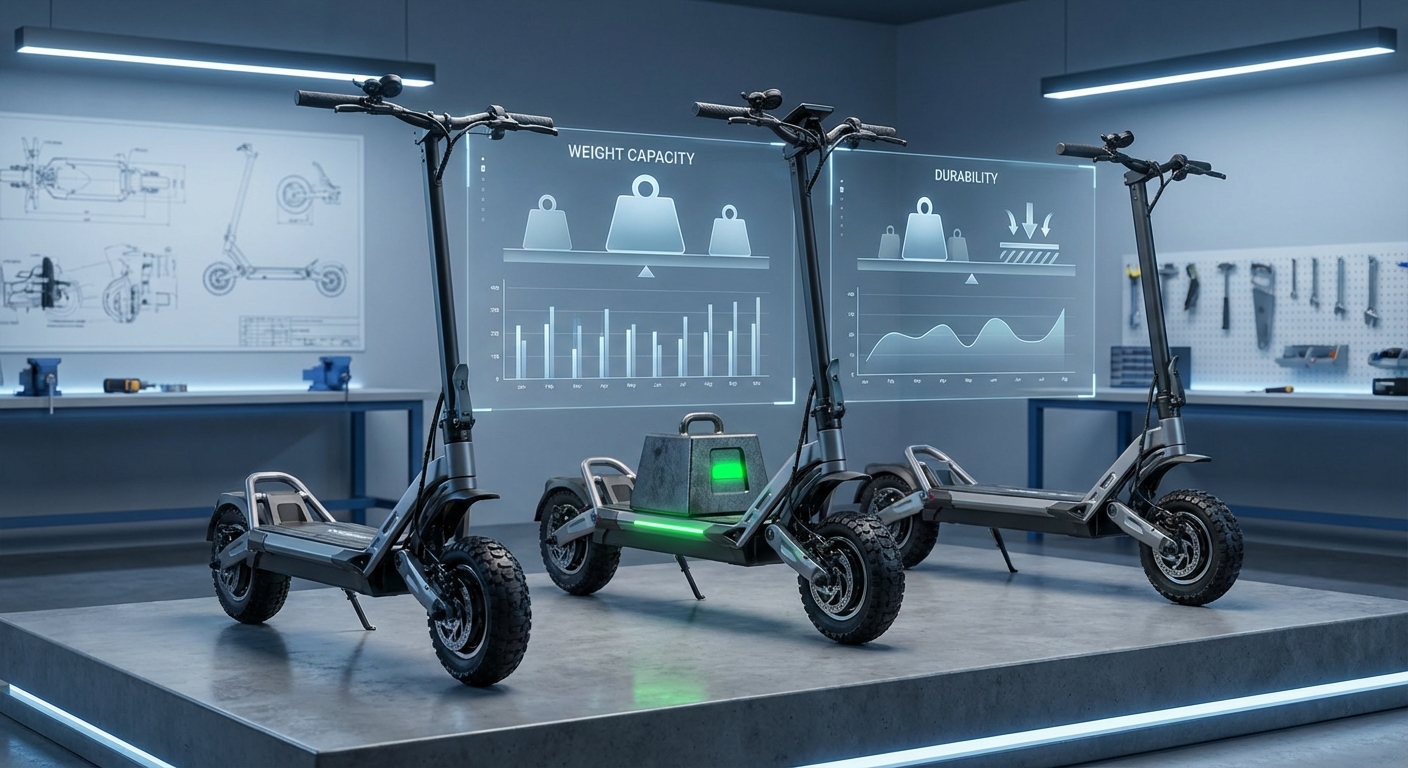
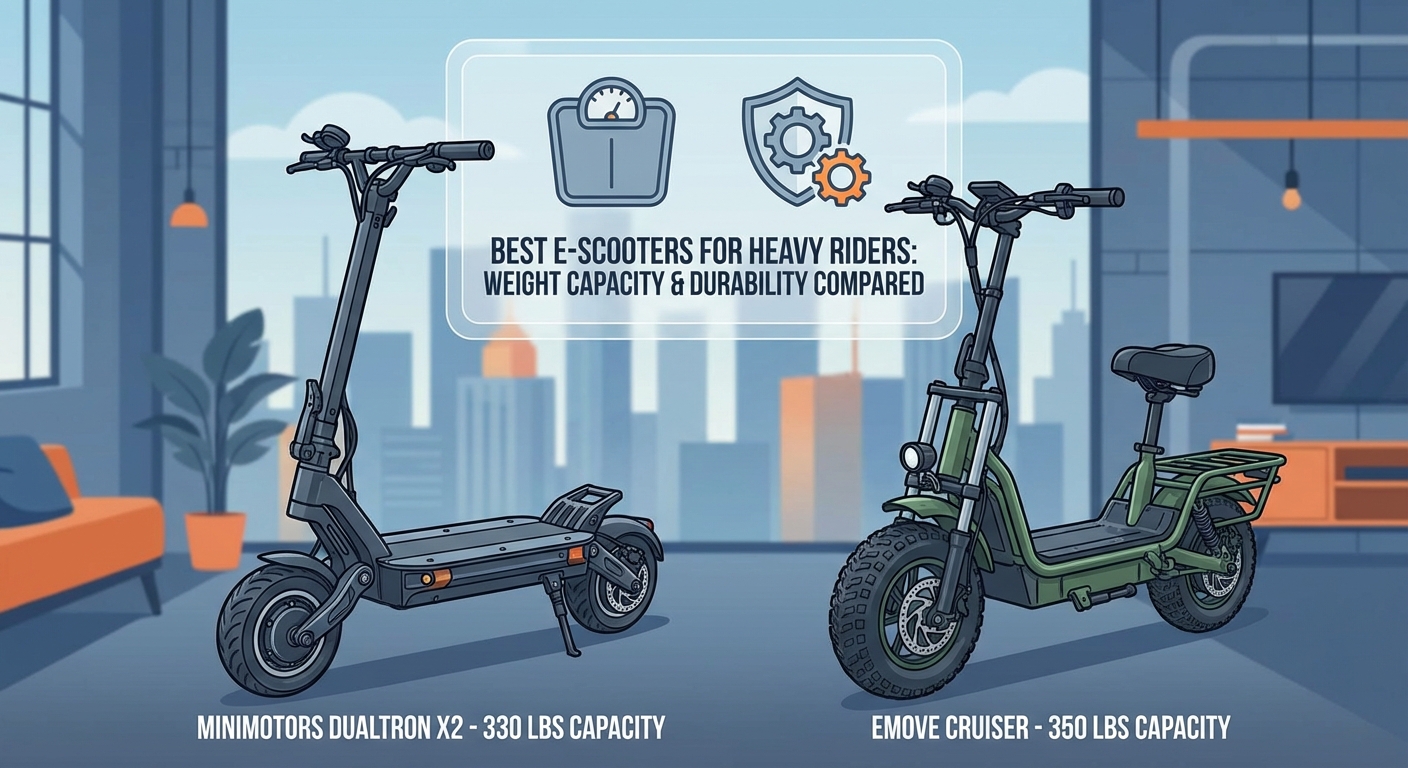
Best E-Scooters for Heavy Riders: Weight Capacity and Durability Compared
Shopping for an electric scooter when you weigh over 250 pounds means facing a market full of vague specs and disappointing performance. Most manufacturers list weight limits that sound impressive until you actually ride the scooter and feel the motor struggle on even gentle inclines. The deck flexes. The brakes feel inadequate. The battery drains faster than advertised.
Heavy riders need scooters with 350+ lb weight capacity, dual motors (1000W minimum total), reinforced decks, and hydraulic or dual braking systems. Look for steel or aircraft-grade aluminum frames, 10-inch pneumatic tires, and batteries rated for at least 15Ah. Budget $800 to $2,500 for models that actually deliver on their promises without compromising safety or performance.
Why Standard Weight Limits Don’t Tell the Whole Story
A scooter rated for 300 pounds might technically support your weight, but that rating assumes perfect conditions. Smooth roads. No inclines. No cargo. No sudden stops.
Real-world riding is different.
You’re carrying a backpack. The pavement has cracks. You hit a curb. The battery is at 40%. Temperature is 85°F. Each of these factors reduces effective performance.
Manufacturers test weight limits on flat surfaces at optimal temperatures with fresh batteries. They rarely account for sustained stress or component fatigue over time.
Understanding why weight limits vary helps you see past marketing claims and focus on engineering reality.
Motor Power Requirements for Heavy Riders
Single 500W motors can’t provide adequate acceleration or hill climbing for riders over 250 pounds. You’ll struggle on bridges, parking garage ramps, and even slight inclines.
Minimum motor specifications:
– Single motor: 800W continuous (1200W peak)
– Dual motor: 1000W total continuous (1600W+ peak)
– Hill climbing: 20% grade minimum capability
Dual motors distribute power more evenly and reduce strain on individual components. They also provide better traction control and more responsive acceleration when you need to merge into traffic or cross intersections safely.
Brushless motors last longer under heavy loads. They generate less heat and require minimal maintenance compared to brushed alternatives.
Choosing appropriate motor power involves matching your typical routes with realistic performance expectations.
Frame Construction and Deck Reinforcement
Aluminum alloy sounds premium, but not all aluminum is equal. Aircraft-grade 6061-T6 aluminum offers the best strength-to-weight ratio for scooter frames. Budget models use softer alloys that bend under stress.
Steel frames handle heavy loads better but add significant weight. A 70-pound scooter is harder to carry upstairs or load into a vehicle.
Deck thickness matters more than most riders realize. Look for:
– Minimum 3mm deck thickness
– Cross-bracing or ribbed reinforcement
– Weight distributed across multiple support points
Some manufacturers add a second layer beneath the deck or use honeycomb internal structures. These designs prevent the flex that makes heavier riders feel unstable at speed.
Welded joints are stronger than bolted connections. Check for clean, consistent welds without gaps or rough edges.
Suspension Systems That Actually Work
Cheap spring suspension compresses fully under heavy riders, bottoming out on every bump. You need either hydraulic dampers or heavy-duty coil springs with adjustable preload.
Front and rear suspension is not optional. It’s essential for:
– Absorbing impacts that would otherwise stress the frame
– Maintaining tire contact with uneven surfaces
– Reducing fatigue on longer rides
– Protecting battery and electrical connections from vibration
Adjustable suspension lets you tune the ride for your weight. Set preload higher to prevent bottoming out while maintaining comfortable damping.
Some models offer lockout features for smooth surfaces where you want maximum efficiency. Others provide multiple compression settings for different terrain types.
Braking Systems for Heavier Riders
Electronic brakes alone cannot safely stop 250+ pounds traveling at 20+ mph. Physics demands more stopping power.
| Brake Type | Stopping Power | Maintenance | Best For |
|---|---|---|---|
| Hydraulic disc | Excellent | Low | Primary braking |
| Mechanical disc | Good | Medium | Backup system |
| Drum brakes | Good | Very low | Rear wheel |
| Electronic | Fair | None | Supplemental only |
Dual braking systems (front and rear) distribute stopping force and prevent skidding. Hydraulic disc brakes provide consistent performance in wet conditions and require less hand strength to engage.
Larger rotors (160mm+) dissipate heat better during repeated braking. Smaller rotors can warp or fade when stopping heavy loads frequently.
Mastering proper braking technique prevents accidents and extends brake life.
Battery Capacity and Range Expectations
Advertised range assumes a 165-pound rider on flat ground at 15 mph. Heavy riders can expect 40-60% of the stated range under similar conditions.
A scooter claiming 40 miles of range might give you 16-24 miles in real use. Plan accordingly.
Battery requirements for heavy riders:
1. Minimum 15Ah capacity (preferably 20Ah+)
2. 48V or 52V systems for better efficiency
3. Name-brand cells (LG, Samsung, Panasonic)
4. Removable batteries for easier charging
Larger batteries add weight but provide the reserve capacity you need. Running a battery below 20% repeatedly shortens its lifespan.
Temperature affects performance dramatically. Cold weather can reduce range by 30%. Hot weather degrades batteries faster over time.
Battery longevity depends on charging habits and how you maintain the cells during storage.
Tire Selection and Pressure Management
Pneumatic tires are mandatory for heavy riders. Solid tires cannot absorb enough impact and transmit every road imperfection directly to the frame.
Minimum tire specifications:
– 10-inch diameter (11-inch preferred)
– Tubeless or reinforced tubes
– Maximum pressure rating 50+ PSI
Wider tires (2.5 to 3 inches) distribute weight better and improve stability. They also provide more contact patch for better traction during acceleration and braking.
Maintain tire pressure at the higher end of the recommended range. Under-inflated tires increase rolling resistance, reduce range, and risk pinch flats.
Check pressure weekly. Temperature changes affect PSI significantly.
“I see heavy riders running low tire pressure thinking it will improve comfort. It actually makes the ride worse and damages the wheels. Proper pressure with good suspension is the right solution.” — E-scooter mechanic with 8 years experience
Recognizing when tires need replacement prevents dangerous blowouts.
Essential Safety Features
Heavy riders generate more momentum, making safety features more critical.
Must-have features:
– Bright LED headlight (minimum 500 lumens)
– Rear brake light with automatic activation
– Reflective strips on deck and stem
– Wide deck (minimum 7 inches)
– IPX4 water resistance or better
Wide decks provide stable foot placement and room to shift weight during turns. Narrow decks force an uncomfortable stance that causes fatigue.
Sturdy kickstands rated for the scooter’s full weight prevent tip-overs when parked. Cheap kickstands bend or break, dropping your scooter onto its side and damaging components.
Visibility becomes crucial during night rides, especially when your stopping distance is longer.
Comparing Top Models for Heavy Riders
Different scooters excel in different areas. Match your priorities to the right model.
For daily commuting: Look for models with 20+ mile real-world range, full fenders, integrated lights, and comfortable ergonomics. Portability matters less than reliability.
For performance: Dual motors, sport mode, and aggressive acceleration appeal to riders who want responsive power. Expect shorter range and higher maintenance.
For value: Mid-range models (around $1,200) offer the best balance of features and durability without premium pricing. Avoid anything under $700 marketed to heavy riders.
For off-road: Knobby tires, long-travel suspension, and high ground clearance handle rough terrain. These scooters are heavier and less efficient on pavement.
Test ride before buying whenever possible. Online reviews from riders in your weight range provide valuable real-world feedback.
Maintenance Considerations for Heavy Riders
Heavier loads accelerate wear on every component. Plan for more frequent maintenance than lighter riders need.
Monthly checks:
– Tire pressure and tread depth
– Brake pad thickness and rotor condition
– Stem and handlebar tightness
– Suspension function and play
– Battery charge cycles and health
Quarterly service:
– Full brake system inspection
– Bearing lubrication
– Electrical connection cleaning
– Frame inspection for cracks or stress
Annual service:
– Complete teardown and inspection
– Bearing replacement
– Brake fluid flush (hydraulic systems)
– Tire replacement
Following a structured maintenance schedule prevents expensive repairs and dangerous failures.
Carry basic tools during rides. A loose bolt at high speed can cause serious accidents. Simple roadside adjustments keep you rolling safely.
Budget Planning and Total Cost of Ownership
The purchase price is only part of your investment.
First-year costs typically include:
– Scooter: $800 to $2,500
– Helmet and protective gear: $100 to $300
– Lock and security: $50 to $150
– Insurance (where required): $100 to $400
– Maintenance and parts: $100 to $300
Ongoing annual costs:
– Tire replacements: $60 to $120
– Brake pads: $30 to $80
– Battery replacement (every 2-3 years): $200 to $600
– General maintenance: $100 to $200
Cheaper scooters often cost more long-term. Frequent repairs, shorter component life, and poor resale value add up quickly.
Quality models from established manufacturers hold value better and have readily available replacement parts. Budget brands may discontinue models, leaving you unable to find compatible components.
Comparing ownership costs against car commuting shows significant savings even with premium scooters.
Legal Requirements and Registration
Weight limits sometimes affect legal classification. Scooters over certain power thresholds may require:
– Registration and license plates
– Motorcycle license
– Insurance
– Helmet use (beyond voluntary safety)
Local regulations vary significantly, so research your area before purchasing.
Some cities restrict scooter weight or power on bike paths and multi-use trails. Verify where you can legally ride your chosen model.
Accessories That Improve the Riding Experience
Heavy riders benefit from specific accessories:
Phone mounts: Secure navigation without fumbling. Choose mounts designed for vibration to prevent damage.
Mirrors: Better visibility in traffic when shoulder checks are harder.
Upgraded grips: Larger diameter grips reduce hand fatigue.
Seat attachments: Optional seats reduce leg strain on longer rides.
Cargo solutions: Rear racks or handlebar bags carry essentials without wearing a backpack.
Lighting upgrades: Additional visibility never hurts.
Essential accessories improve safety and comfort without breaking your budget.
Common Mistakes Heavy Riders Make
Learning from others’ errors saves money and frustration.
Mistake 1: Buying based on weight limit alone without checking motor power or build quality.
Mistake 2: Ignoring suspension quality to save $200, then spending more on chiropractor visits.
Mistake 3: Skipping protective gear because “I’m only going a few blocks.”
Mistake 4: Overcharging or undercharging batteries based on convenience rather than best practices. Proper charging extends battery life significantly.
Mistake 5: Neglecting regular maintenance until something breaks.
Mistake 6: Riding in weather conditions beyond the scooter’s capabilities.
Mistake 7: Exceeding weight capacity by carrying heavy cargo without accounting for combined load.
First-time riders make predictable errors that experienced users have already solved.
Finding the Right Scooter for Your Needs
Your perfect scooter depends on specific use cases.
Urban commuters need reliability, weather resistance, and enough range for round trips with charging margin. Portability matters if you need to carry it upstairs or onto public transit.
Suburban riders cover longer distances and need extended battery capacity. Comfort becomes more important than portability.
Mixed-terrain riders require robust suspension and all-terrain tires. Expect compromises in efficiency and weight.
Weekend recreational riders can prioritize performance over practicality. Fun factor matters more than daily reliability.
Match your primary use case to appropriate specifications rather than trying to find one scooter that does everything perfectly.
Testing Before You Commit
If possible, rent or borrow similar models before purchasing. A 10-minute test ride reveals more than hours of online research.
Pay attention to:
– How the deck feels under your feet
– Whether you can comfortably reach controls
– Acceleration smoothness and power delivery
– Brake feel and stopping confidence
– Suspension action over bumps
– Overall stability at cruising speed
Some shops offer demo days or trial periods. Take advantage of these opportunities.
Join local e-scooter groups or forums. Experienced riders often let others test their scooters and provide honest feedback about ownership experience.
Warranty Coverage and Customer Support
Premium pricing should include premium support.
Minimum warranty expectations:
– 12 months on frame and structure
– 6 months on electrical components
– 3 months on wear items (tires, brake pads)
Better manufacturers offer:
– 24-month comprehensive coverage
– Lifetime frame warranty
– Free shipping on warranty claims
– Local service centers
Read warranty terms carefully. Many exclude damage from exceeding weight limits, even if you’re within the rated capacity. Others void coverage for any unauthorized repairs or modifications.
Customer support quality matters when problems arise. Check reviews specifically mentioning warranty claims and repair experiences.
When to Upgrade vs Repair
Older scooters eventually become money pits. Know when to move on.
Repair if:
– The scooter is less than 2 years old
– Frame and structure are sound
– Parts are readily available
– Repair costs less than 40% of replacement value
Replace if:
– Frame shows cracks or permanent deformation
– Battery replacement costs approach new scooter pricing
– Multiple systems need repair simultaneously
– Safety features are outdated or inadequate
– You’ve outgrown the performance level
Technology improves rapidly. A three-year-old scooter lacks features now considered standard. Better batteries, improved motors, and enhanced safety systems make newer models significantly better.
Making Your Choice With Confidence
Heavy riders deserve scooters built for their needs, not compromised versions of models designed for lighter users.
Start with your must-have features. Eliminate options that don’t meet minimum specifications. Compare remaining models on price, availability, and user reviews from riders in your weight range.
Don’t rush. The right scooter will serve you reliably for years. The wrong one becomes an expensive mistake within months.
Choosing your first scooter involves balancing multiple factors, but focusing on durability and appropriate specifications narrows the field quickly.
Remember that the best electric scooters for heavy riders prioritize structural integrity and component quality over flashy features. A basic scooter with excellent build quality outperforms a feature-loaded model with weak construction.
Invest in quality now. Your body, wallet, and safety will thank you every time you ride.
