Understanding E-Scooter Braking Systems: Disc, Drum, and Electronic Explained
Your electric scooter can hit 25 mph in seconds. But can it stop just as reliably? The braking system on your scooter determines whether you glide safely to a halt or skid into trouble. Most new riders focus on speed and range, then realize too late that brakes matter just as much. Understanding the three main types of braking systems will help you choose the right scooter and keep it stopping smoothly for years.
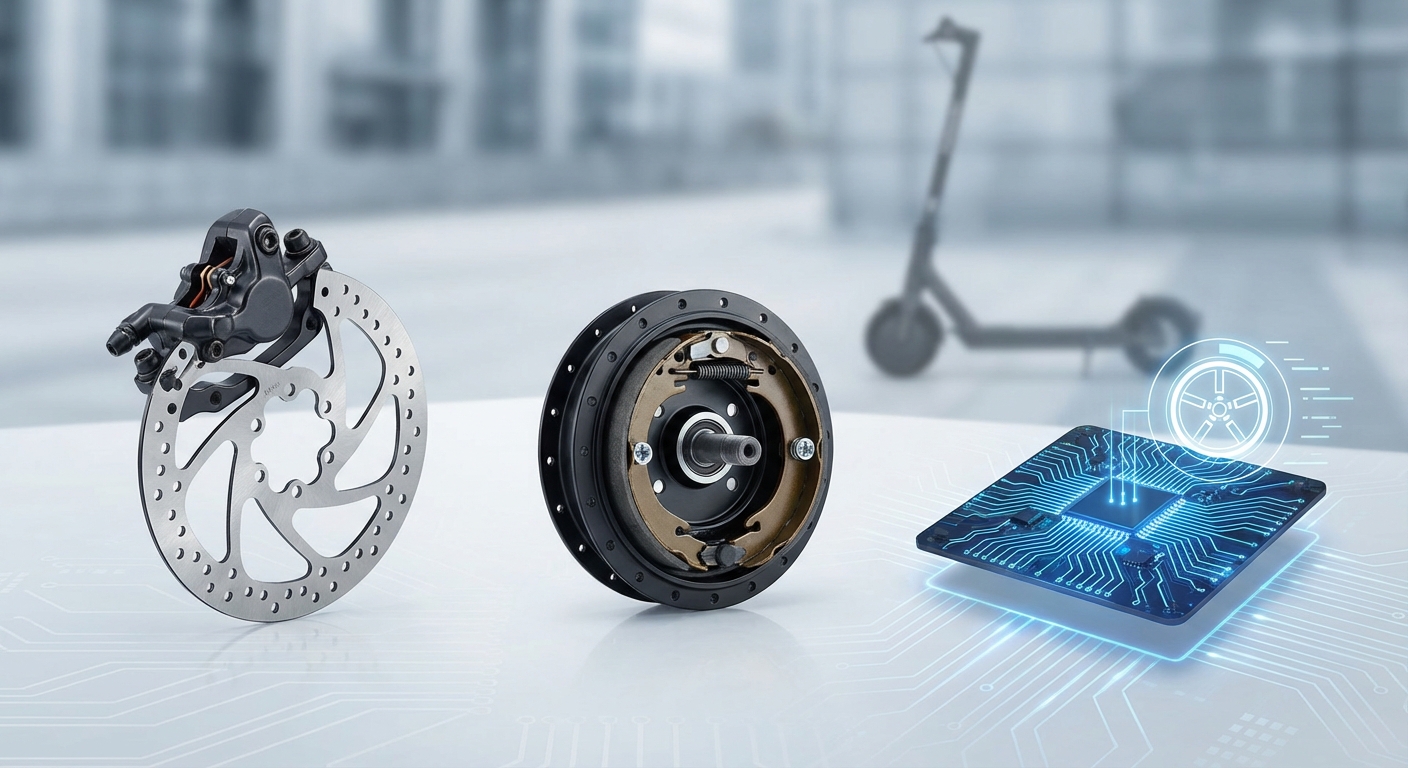
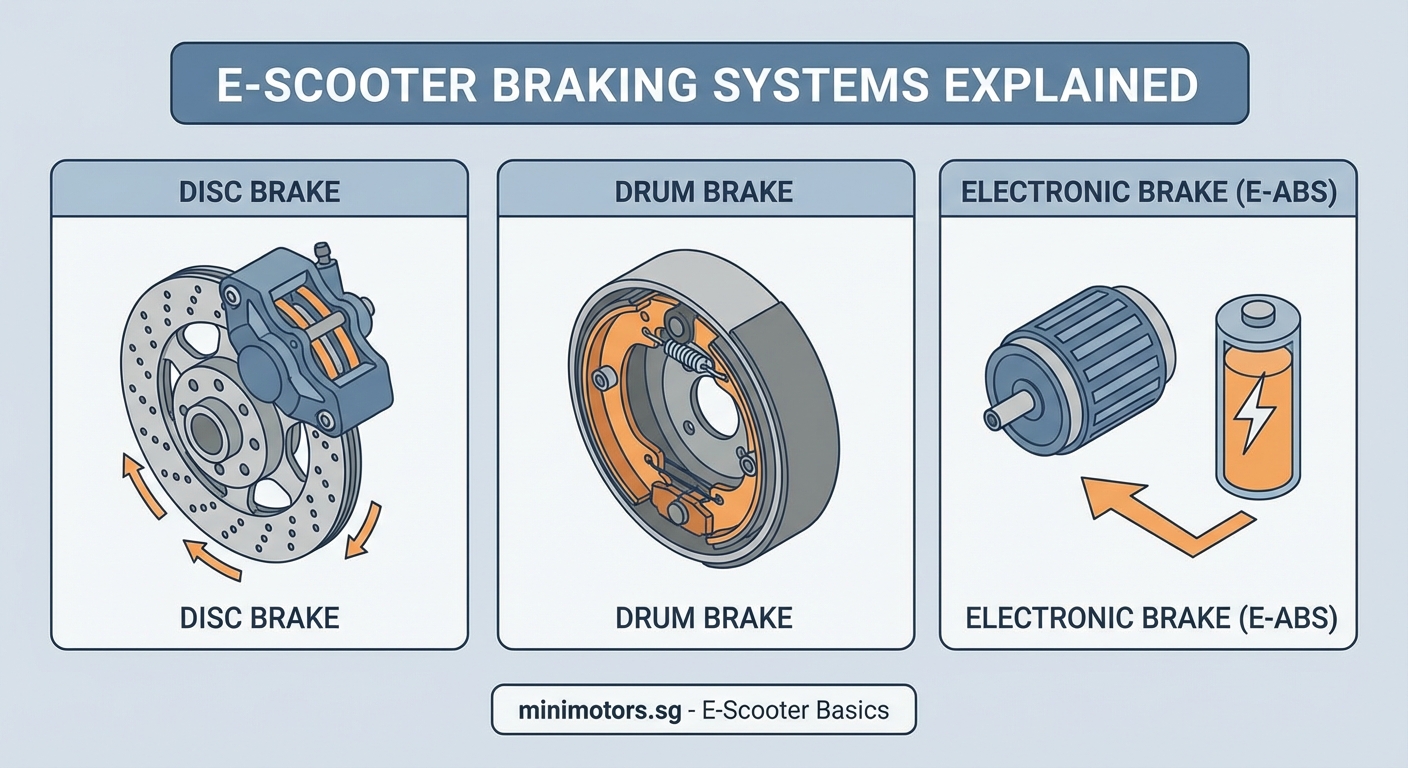
Electric scooters use three primary braking systems: mechanical disc brakes for powerful stopping, drum brakes for low maintenance, and electronic brakes for smooth regeneration. Each system offers distinct advantages in performance, durability, and upkeep. Most modern scooters combine two or more brake types to balance stopping power with energy efficiency. Your choice depends on riding conditions, maintenance preferences, and budget constraints.
Mechanical disc brakes deliver maximum stopping power
Disc brakes work like the ones on your bicycle or car. A metal rotor attaches to the wheel hub. When you pull the brake lever, a caliper squeezes brake pads against the spinning rotor. Friction slows the wheel.
You’ll find two types of disc brakes on electric scooters. Hydraulic disc brakes use fluid pressure to activate the caliper. Cable disc brakes rely on a steel cable pulled by the lever. Hydraulic systems offer smoother, more consistent braking. Cable systems cost less and are easier to adjust at home.
Disc brakes excel in wet conditions. The rotor sits away from the ground, so water and mud wash off quickly. This keeps braking performance steady even during rain. Most performance scooters and commuter vs off-road e-scooters use disc brakes for this reason.
The downside? Disc brakes need regular maintenance. Brake pads wear down over time. Rotors can warp if you brake hard repeatedly. You’ll also hear squealing if pads get contaminated with oil or dirt.
How to maintain disc brakes properly
- Inspect brake pads every month for thickness. Replace them when less than 1mm of pad material remains.
- Check rotor alignment by spinning the wheel. The rotor should pass through the caliper without rubbing.
- Clean rotors with isopropyl alcohol and a lint-free cloth. Never touch the rotor surface with bare hands.
- Bleed hydraulic lines annually to remove air bubbles that reduce braking force.
Drum brakes offer reliable, low-maintenance stopping
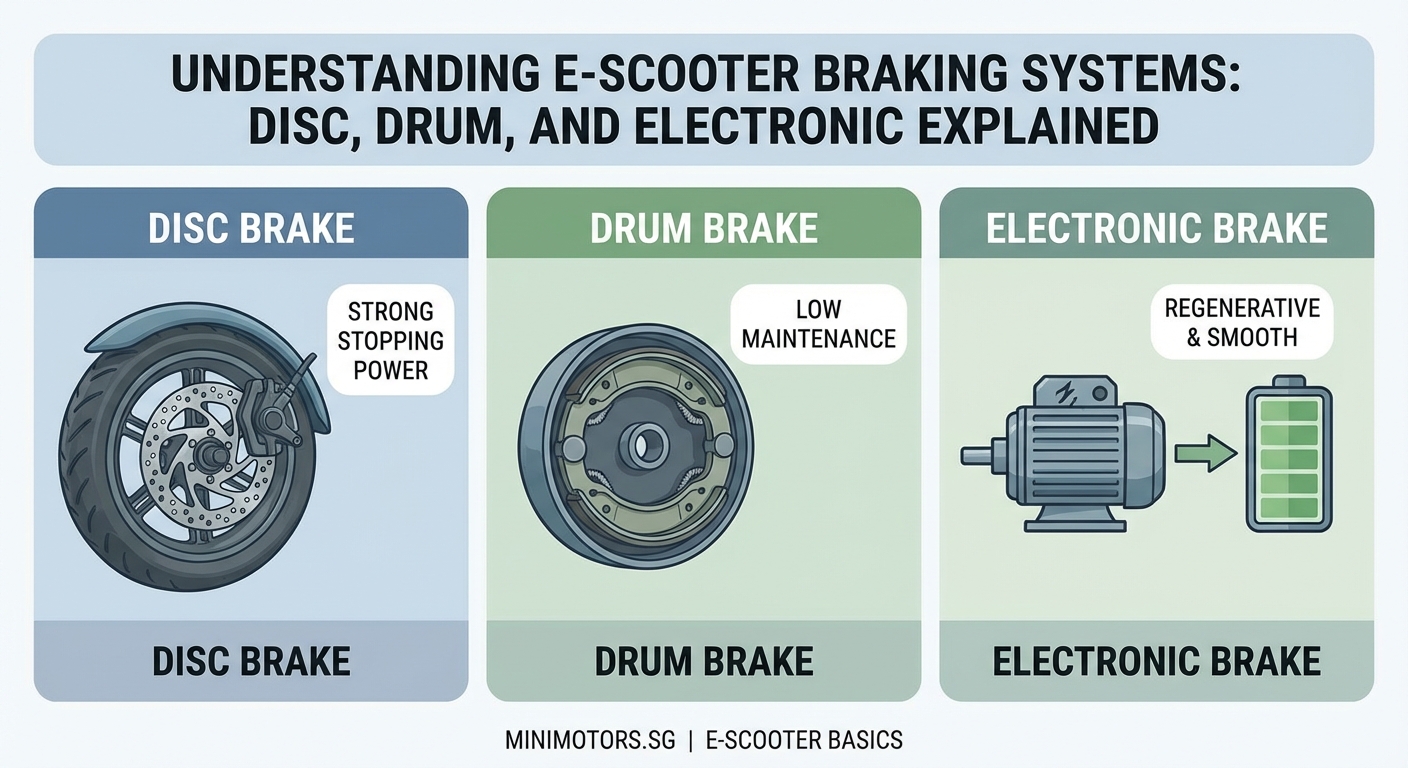
Drum brakes hide inside the wheel hub. When you activate the brake lever, brake shoes press outward against the inside of a metal drum. This friction slows the wheel. You won’t see any external parts, which protects the system from water, dust, and debris.
Drum brakes require almost no maintenance. The sealed design keeps brake shoes clean and dry. They last much longer than disc brake pads. Many riders go years without touching their drum brakes.
The sealed nature also means consistent performance. Rain doesn’t affect stopping power. Mud can’t clog the mechanism. This makes drum brakes popular on budget scooters and city commuters where reliability matters more than raw power.
But drum brakes have limitations. They generate more heat during extended braking. This heat can reduce stopping power on long downhill rides. They also weigh more than disc brakes, which affects scooter handling. And when drum brakes finally do wear out, replacement costs more because you need to open the sealed hub.
“Drum brakes work best for flat urban commuting where you brake frequently but gently. If you ride hills or need aggressive stopping power, choose disc brakes instead.” — Mobility engineer with 12 years of micro-mobility experience
Electronic brakes recapture energy while slowing down
Electronic brakes use the motor itself to slow the scooter. When you activate the brake, the motor switches from driving the wheel to resisting its rotation. This resistance creates drag that slows you down. The motor acts as a generator during this process, feeding electricity back into the battery.
This regenerative braking extends your range slightly. You recover 5 to 15 percent of energy depending on how much you brake. The effect is most noticeable in stop-and-go city traffic where you brake often.
Electronic brakes feel different from mechanical brakes. They provide smooth, progressive slowing rather than aggressive stopping. You can modulate speed precisely, which helps when navigating crowded sidewalks or bike lanes. Many riders prefer this gentler feel for daily commuting.
The major limitation is stopping distance. Electronic brakes alone can’t stop a scooter as fast as mechanical brakes. They work best at moderate speeds. At high speeds or in emergencies, you need mechanical brakes to supplement the electronic system. That’s why most scooters combine both types. You can learn more about what is regenerative braking and how does it extend your e-scooter’s range to maximize this feature.
Electronic brakes also lose effectiveness when your battery is fully charged. The system can’t feed energy back into a full battery, so regenerative braking stops working. This catches new riders by surprise after a full charge.
Comparing brake types side by side
| Brake Type | Stopping Power | Maintenance Frequency | Weather Performance | Cost Range |
|---|---|---|---|---|
| Hydraulic Disc | Excellent | Monthly pad checks | Good in all conditions | $150-400 |
| Cable Disc | Very Good | Monthly adjustments | Good in all conditions | $80-200 |
| Drum | Good | Annual inspection | Excellent in all conditions | $100-250 |
| Electronic | Moderate | Software updates only | Reduced when battery full | Built into motor |
Most scooters use dual braking systems
Manufacturers rarely rely on a single brake type. Most scooters combine two or three systems for better performance and safety. The most common setup pairs electronic braking in the front with a disc or drum brake in the rear.
This combination gives you smooth, energy-efficient slowing for everyday riding. When you need to stop fast, the rear mechanical brake provides extra power. The front electronic brake also helps balance weight distribution during braking, which prevents the rear wheel from skidding.
Higher-end scooters add disc brakes to both wheels. This dual-disc setup delivers maximum stopping power for high-speed riding or heavy loads. You’ll find this configuration on best e-scooters for heavy riders and performance models.
Budget scooters often use a single rear brake, either drum or disc. This saves money but increases stopping distance. If you’re considering a single-brake scooter, make sure it includes electronic braking for the front wheel at minimum.
Brake maintenance mistakes that reduce safety
Even the best braking system fails without proper care. Here are the most common mistakes that compromise your stopping power:
- Ignoring squealing sounds. Squealing means contaminated or worn pads. Continuing to ride damages the rotor and increases stopping distance.
- Over-tightening brake cables. This causes constant drag, wearing pads faster and reducing range.
- Skipping brake pad replacement. Worn pads damage rotors, turning a $20 pad replacement into a $150 rotor replacement.
- Using the wrong cleaning products. Soap or degreaser on brake pads ruins their friction properties. Use only isopropyl alcohol.
- Neglecting brake lever adjustment. Levers should engage halfway through their travel. Too loose means weak braking. Too tight causes hand fatigue.
Regular inspection prevents these issues. Check your brakes before every ride using is your e-scooter safe to ride? pre-ride inspection checklist as your guide.
Choosing the right brake system for your needs
Your ideal brake setup depends on where and how you ride. Consider these factors:
For flat city commuting: A drum brake rear with electronic front braking handles stop-and-go traffic efficiently. Low maintenance suits daily use. The sealed drum resists weather damage.
For hilly terrain: Dual disc brakes provide the stopping power you need on steep descents. Hydraulic systems reduce hand fatigue during long downhill rides. Electronic braking helps control speed without overheating mechanical brakes.
For budget-conscious buyers: Cable disc brakes offer good performance at lower cost. They’re easier to maintain yourself compared to hydraulic systems. Pair with electronic braking for balanced performance. Check budget e-scooters under $500 to see which models offer the best brake value.
For performance riding: Dual hydraulic disc brakes with electronic front braking give maximum control at high speeds. This setup costs more but delivers professional-level stopping power.
For minimal maintenance: Drum brakes require the least attention. Electronic braking needs no physical maintenance at all. This combination works well for riders who want reliable transportation without regular upkeep.
How weather affects different brake types
Rain changes everything about braking performance. Water on brake surfaces reduces friction. Understanding how each system handles wet conditions helps you ride safely year-round.
Disc brakes shed water quickly because the rotor spins in open air. The first brake application wipes water off the rotor surface. Subsequent braking works normally. You’ll notice slightly longer stopping distance on the first brake pull, then normal performance returns.
Drum brakes maintain consistent performance in rain because the sealed housing keeps water out. You won’t feel any difference between dry and wet conditions. This predictability helps newer riders who aren’t comfortable adjusting their braking technique for weather.
Electronic brakes work identically in all weather since they use the motor, not friction. However, wet roads reduce tire grip, which limits how much braking force you can apply before the wheel skids. The brake system works fine, but the tire-to-road connection becomes the limiting factor. Learn more about safe riding in how to ride an e-scooter in the rain without losing control.
Cold weather affects all brake types. Hydraulic fluid thickens, making brakes feel spongy. Cable tension changes as metal contracts. Electronic systems work normally, but batteries provide less power, which reduces regenerative braking effectiveness. Always test your brakes gently after your scooter sits in freezing temperatures.
Upgrading your scooter’s braking system
Many riders eventually want more stopping power than their stock brakes provide. Upgrades are possible but require careful consideration.
Switching from cable to hydraulic disc brakes improves performance significantly. You’ll need new levers, calipers, brake lines, and possibly different mounting hardware. This upgrade costs $200 to $400 including installation. It makes sense for riders who keep their scooter long-term and ride frequently.
Replacing basic disc brakes with larger rotors increases stopping power without changing the entire system. Larger rotors provide more leverage and better heat dissipation. This upgrade costs $50 to $100 and works with your existing calipers in most cases.
Adding a second brake to a single-brake scooter requires significant modification. You need mounting points, cables or hydraulic lines, and a second brake lever. Unless your scooter was designed for dual brakes, this upgrade rarely makes financial sense.
Upgrading electronic braking requires software changes or new motor controllers. This falls outside DIY capability for most riders. If you want better electronic braking, consider upgrade your ride: performance accessories that actually make a difference for practical improvements you can actually install.
Emergency braking techniques for each system
Knowing how to stop fast matters more than having the best brakes. Each system requires different technique for maximum effectiveness.
Disc brakes: Pull the lever firmly but not abruptly. Squeezing too hard locks the wheel, causing a skid. Apply pressure progressively until you feel the wheel start to slow, then hold that pressure. Use both brakes together, with slightly more force on the rear to prevent the front wheel from washing out.
Drum brakes: These respond more slowly than disc brakes. Start braking earlier than you think necessary. Apply steady, firm pressure rather than pumping the brake. The sealed mechanism takes a moment to fully engage.
Electronic brakes: Activate electronic braking first to scrub off initial speed. Then add mechanical braking for final stopping. Electronic brakes work best at moderate speeds, so don’t rely on them alone in true emergencies.
Practice emergency stops in a safe area before you need them on the road. Find an empty parking lot and practice stopping from different speeds. Notice how much distance you need and how each brake feels at maximum force. This practice builds muscle memory that activates automatically when you need it. For more techniques, see mastering e-scooter braking techniques for emergency situations.
Signs your brakes need immediate attention
Certain symptoms indicate dangerous brake problems. Address these immediately:
- Brake lever pulls to the handlebar. This means worn pads, air in hydraulic lines, or broken cables. You have minimal stopping power.
- Grinding or scraping sounds. Metal-on-metal contact damages rotors and reduces braking effectiveness. Pads are completely worn.
- Brake lever feels spongy. Air in hydraulic lines or stretched cables reduces braking force. The system needs bleeding or adjustment.
- One brake pulls harder than the other. Uneven braking causes instability and increases stopping distance. One side needs maintenance.
- Visible fluid leaks on hydraulic brakes. Brake fluid loss eliminates stopping power. Don’t ride until you fix the leak.
- Pulsing sensation when braking. Warped rotors cause uneven braking. This happens after repeated hard stops or riding through water then parking.
Don’t ignore these warning signs. Brake failure causes serious accidents. Most brake repairs cost less than $100 if you catch problems early. Waiting turns minor issues into expensive repairs and dangerous riding conditions. Regular maintenance using the ultimate e-scooter maintenance checklist prevents most brake problems before they become critical.
Stopping power matters more than speed
Your scooter’s top speed gets attention in marketing materials. But braking performance determines whether you arrive safely. Understanding how disc, drum, and electronic brakes work helps you choose the right scooter for your needs and maintain it properly.
Most riders do well with a combination system that balances stopping power, maintenance requirements, and cost. Test brakes before every ride, address problems immediately, and practice emergency stops regularly. Your braking system works hard to keep you safe, so give it the attention it deserves.
