
7 Essential Things Every First-Time E-Scooter Rider Should Know
You just bought your first electric scooter, and it’s sitting in your living room looking equal parts exciting and intimidating. Maybe you’ve watched a few YouTube videos. Maybe you’ve seen people glide past you on the street and thought it looked easy. But now that you’re about to step on that deck for the first time, you realize there’s more to this than just pressing the throttle and hoping for the best.
New electric scooter riders need to master basic safety gear, understand their scooter’s controls, practice acceleration and braking in safe spaces, learn proper stance and balance, check local riding laws, perform pre-ride inspections, and maintain their battery correctly. These seven fundamentals ensure safe, confident riding from day one and prevent common beginner mistakes that lead to accidents or equipment damage.
Protective Gear Isn’t Optional
Your scooter might only go 15 mph, but that’s fast enough to cause serious injury if you fall.
A helmet is non-negotiable. Not the dusty bike helmet from your garage, but one that fits properly and meets safety standards. It should sit level on your head, cover your forehead, and stay put when you shake your head side to side.
Beyond the helmet, consider these essentials:
- Wrist guards to prevent fractures during falls
- Knee pads for protection on rough landings
- Elbow pads to shield your joints
- Closed-toe shoes with good grip (never sandals or flip-flops)
- Gloves for better grip and hand protection
Many first-time riders skip protective gear because they feel silly or think they won’t fall. But even experienced riders take tumbles when they hit unexpected obstacles or wet surfaces.
You don’t need to look like you’re heading to a skate park. Modern protective gear comes in sleek, minimal designs that work under regular clothes. Start with the helmet and wrist guards at minimum. Add more protection as you gain confidence and start riding faster or in more challenging conditions.
Understanding Your Scooter’s Controls Before You Ride
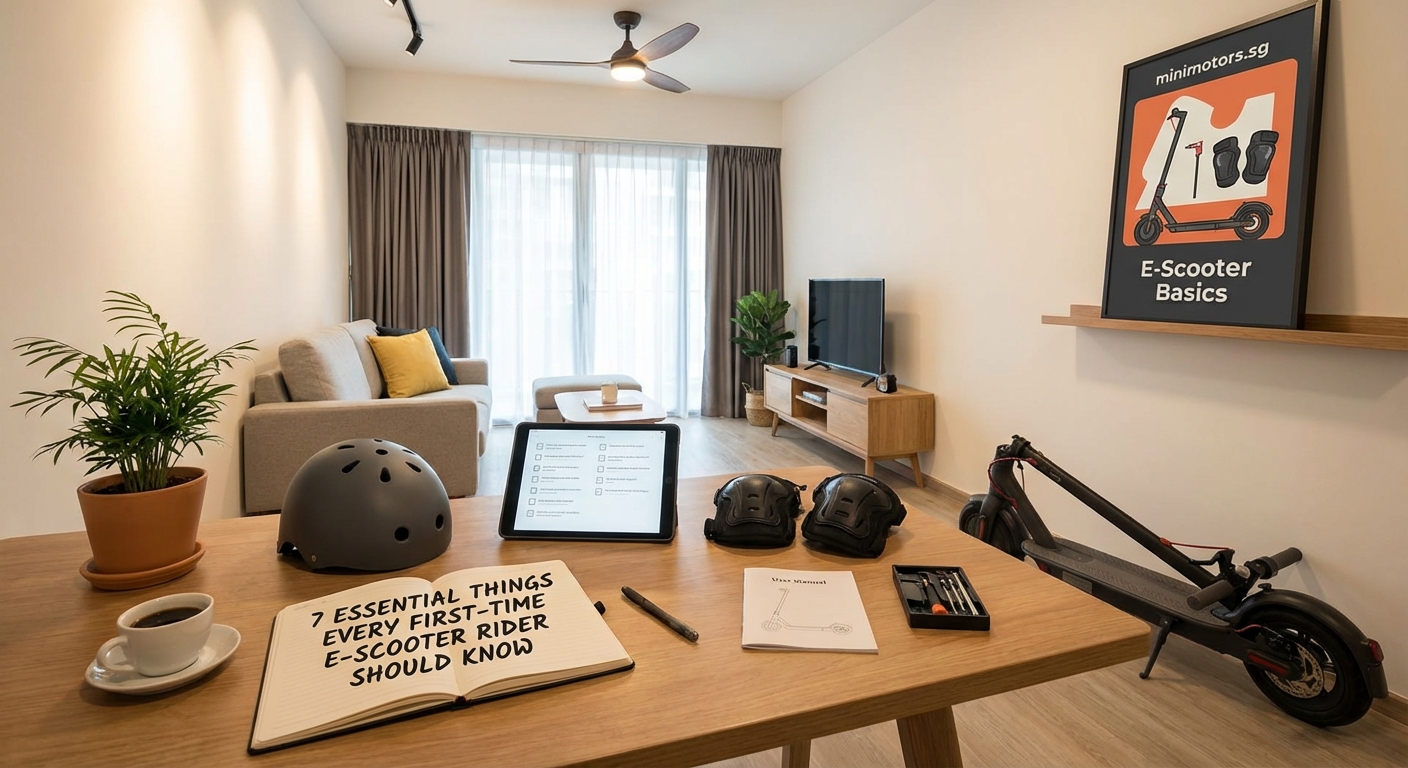
Every electric scooter has slightly different controls, but most share common features you need to identify before your first ride.
Find your throttle. It’s usually on the right handlebar, either as a thumb lever or a twist grip. Press or twist it gently while the scooter is off to feel how much resistance it has. Some throttles are sensitive, others require more pressure.
Locate both brakes. Most scooters have a hand brake on the left handlebar and either an electronic brake button or a foot brake on the rear fender. Test each one individually while stationary to understand how they feel.
Check your display screen. It should show your current speed, battery level, and riding mode. Learn how to switch between modes before you start riding. Eco mode limits your top speed and is perfect for beginners.
Look for these additional features:
- Power button (usually requires a long press to turn on)
- Lights switch (if your scooter has built-in lights)
- Cruise control button (disable this for your first few rides)
- Folding mechanism (practice folding and unfolding a few times)
Some scooters require a kick start. You need to push off with your foot and reach a certain speed before the motor engages. Others have a zero-start throttle that works from a standstill. Check your manual to know which type you have.
If you’re still deciding on your first scooter, how to choose your first electric scooter can help you pick the right model for your needs.
Mastering Acceleration and Braking in a Safe Space
Don’t take your scooter straight into traffic. Find an empty parking lot, quiet street, or park path where you can practice without pedestrians or cars.
Start with the scooter in its lowest power mode. Place one foot on the deck near the front, keeping the other on the ground. If your scooter requires a kick start, push off gently with your ground foot two or three times, then place it on the deck behind your front foot.
Apply the throttle gradually. Jerky acceleration is the number one cause of beginner falls. Your scooter can wait. Ease into it.
Practice stopping from slow speeds first. Use both brakes together, applying slightly more pressure to the rear brake. Pressing only the front brake can flip you forward. Slamming only the rear brake can cause skidding.
Here’s a practice routine for your first session:
- Ride straight for 20 feet at walking speed, then brake to a complete stop
- Repeat five times, focusing on smooth acceleration and controlled braking
- Gradually increase your speed to a comfortable jogging pace
- Practice turning in wide arcs, leaning slightly into each turn
- Try emergency stops from different speeds (in a safe area with no obstacles)
Spend at least 30 minutes on these basics before venturing into real-world riding conditions. Most accidents happen because riders overestimate their skill level in the first few days.
Understanding e-scooter braking systems can help you get more control over your specific model.
Finding the Right Stance and Balance
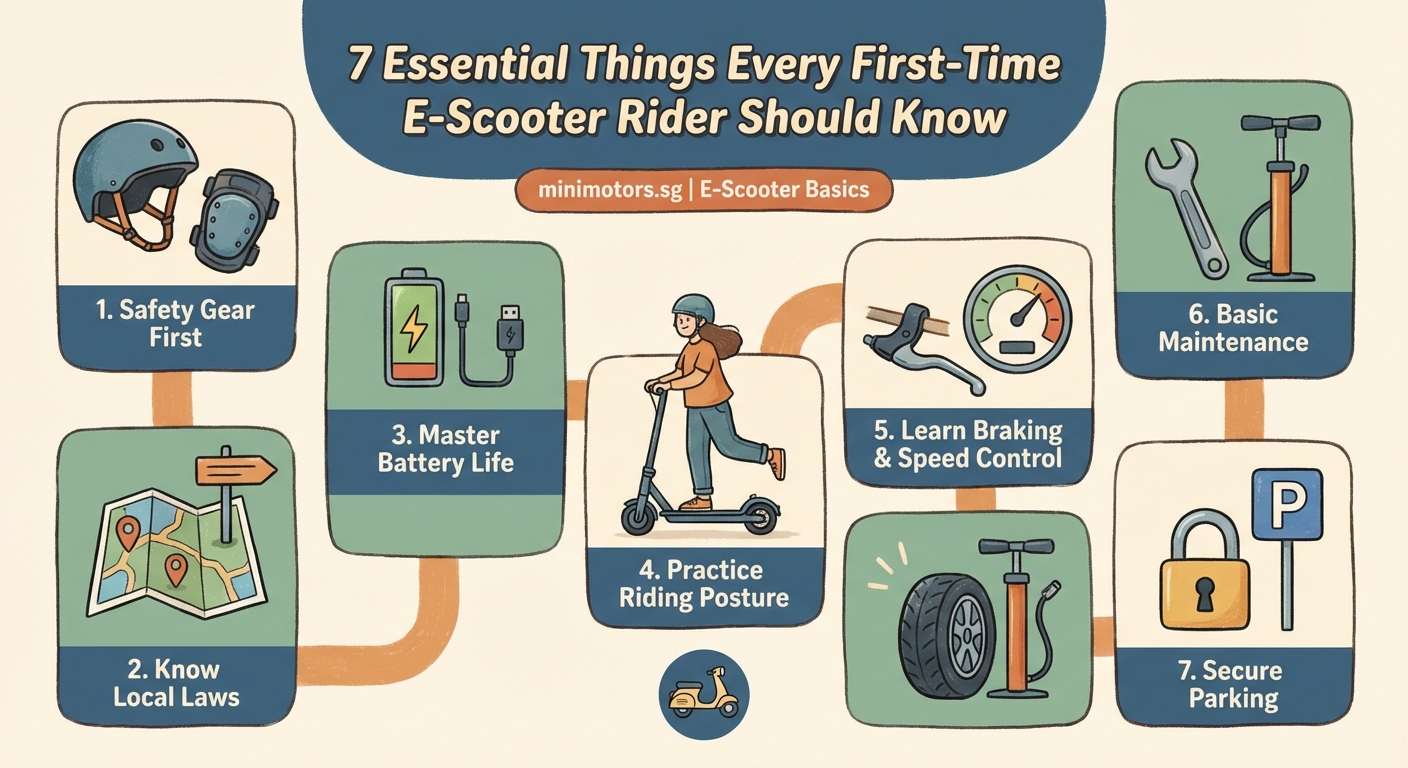
Your body position affects everything from comfort to control.
Stand with your feet shoulder-width apart, one foot slightly ahead of the other. Your dominant foot usually goes in front, but try both positions to see what feels natural.
Keep your knees slightly bent. Locked knees transfer every bump directly to your spine and make it harder to maintain balance. Think of your legs as shock absorbers.
Hold the handlebars with a relaxed grip. White-knuckle gripping causes arm fatigue and reduces your ability to steer smoothly. Your hands should rest comfortably on the grips with your wrists straight, not bent up or down.
Look ahead, not down at the deck. Your body follows your eyes. If you stare at the ground right in front of your scooter, you’ll miss obstacles and have trouble maintaining a straight line.
Shift your weight for different situations:
| Situation | Weight Distribution | Why It Matters |
|---|---|---|
| Accelerating | Slightly back | Prevents front wheel lift |
| Braking | Centered or slightly forward | Maintains traction on front wheel |
| Going uphill | Forward | Keeps front wheel grounded |
| Going downhill | Back | Reduces speed naturally |
| Turning | Into the turn | Improves stability and control |
Practice shifting your weight while standing still. Rock forward and back gently to feel how your scooter responds. This muscle memory helps when you’re moving.
Some riders prefer to switch their front foot occasionally on longer rides to prevent fatigue. If you do this, slow down first and make the switch smoothly.
Knowing the Rules Where You Ride
Electric scooter laws vary wildly by location. What’s legal in one city might get you a ticket two miles away.
Start by checking if e-scooters are allowed on sidewalks in your area. Many cities prohibit sidewalk riding and require you to use bike lanes or roads. Some ban e-scooters entirely in certain districts.
Speed limits matter. Even if your scooter can hit 25 mph, local laws might cap you at 15 mph on bike paths or 10 mph in pedestrian areas. Your display should help you monitor your speed.
Age restrictions exist in most places. Some areas require riders to be 16 or older. Others set the minimum at 18. A few require a driver’s license or special permit.
Research these specific regulations:
- Helmet requirements (mandatory for all riders, only minors, or not required)
- Where you can legally park or leave your scooter
- Insurance or registration requirements
- Riding under the influence laws (yes, they apply to scooters)
- Maximum motor power allowed in your jurisdiction
Don’t rely on what you see other riders doing. They might be breaking laws without realizing it, or they might have already received warnings.
Understanding e-scooter speed limits provides detailed information about legal requirements in different areas.
“The biggest mistake new riders make is assuming e-scooters are toys with no legal requirements. Treat your scooter like any other vehicle on the road. Know the rules, follow them, and ride defensively.”
Performing a Pre-Ride Safety Check
Spending two minutes on a safety check before each ride can prevent accidents and expensive repairs.
Start with the tires. Press down on them with your thumb. Pneumatic (air-filled) tires should feel firm, not squishy. Check for cuts, embedded objects, or excessive wear. Solid tires should show no cracks or chunks missing.
Test both brakes while stationary. Squeeze the hand brake and make sure the lever doesn’t pull all the way to the handlebar. Press the rear brake and verify it engages smoothly. If either brake feels loose or unresponsive, don’t ride until you fix it.
Inspect the folding mechanism if your scooter has one. Make sure it’s fully locked in the riding position. A partially latched stem can collapse while you’re riding, causing serious injury.
Check these additional items:
- Handlebar tightness (no wobbling side to side)
- Deck condition (no cracks or loose parts)
- Battery charge level (enough for your planned trip plus 20% buffer)
- Lights and reflectors (clean and functional for visibility)
- Kickstand stability (if equipped)
Look for any loose bolts or screws. Electric scooters vibrate during use, which can gradually loosen hardware. A quick visual scan takes seconds but catches problems before they become dangerous.
Listen to your scooter when you first start riding. New sounds like clicking, grinding, or rattling indicate something needs attention. Don’t ignore them.
For a comprehensive checklist, is your e-scooter safe to ride covers everything you should verify before heading out.
Caring for Your Battery From Day One
Your battery is the most expensive component on your scooter. Treat it right from the start.
Charge your battery fully before your first ride. Most scooters ship with partial charges, and a full initial charge helps calibrate the battery management system.
Don’t let your battery drain completely. Lithium batteries hate being fully depleted. Try to recharge when you hit 20-30% remaining. This habit can double your battery’s lifespan.
Use only the charger that came with your scooter. Cheap third-party chargers might have incorrect voltage or amperage, which damages battery cells over time.
Follow these charging best practices:
- Charge in a cool, dry place (not in direct sunlight or freezing temperatures)
- Let your scooter cool down for 15 minutes after a ride before plugging in
- Unplug once fully charged (leaving it plugged in for days can reduce capacity)
- Charge at least once a month even if you’re not riding regularly
- Store at 50-60% charge if you won’t use your scooter for weeks
Temperature affects battery performance. Cold weather reduces range significantly. Hot weather can trigger thermal protection that limits power output. Both are normal, but extreme temperatures can cause permanent damage.
Watch for warning signs of battery problems:
- Sudden drops in range
- Longer charging times than normal
- Battery getting unusually hot during charging or riding
- Swelling or deformation of the battery case
- Error messages on your display
Many new riders wonder about charging their e-scooter battery overnight. Modern scooters have protection circuits, but understanding proper charging habits helps maximize battery life.
If you make common battery mistakes early on, you might need to replace your battery within a year instead of three or four years. The mistakes that kill your e-scooter battery life guide shows what to avoid.
Building Confidence Through Gradual Progression
You don’t need to master everything in one day.
Week one should focus on basic control in safe, flat areas. Get comfortable with acceleration, braking, and turning at moderate speeds. Avoid busy streets, hills, and riding in the dark.
Week two, add variety to your practice routes. Find gentle slopes to practice uphill and downhill riding. Try different surfaces like smooth pavement, rougher asphalt, and painted road markings (which can be slippery).
By week three, you can start incorporating your scooter into real commutes or errands. Stick to routes with bike lanes or low-traffic streets. Plan your path in advance so you’re not making navigation decisions while riding.
Common challenges for first-time riders and how to handle them:
- Curbs and bumps: Approach straight on, not at an angle. Bend your knees and shift your weight back slightly as you go over
- Wet surfaces: Reduce speed by 30-40% and increase following distance. Braking takes much longer
- Pedestrians: Slow to their walking pace when passing. Give them space and use a bell or verbal warning
- Dogs: Never swerve suddenly. Slow down and pass calmly. Most dogs lose interest if you don’t react
- Car doors: Stay at least three feet from parked cars. Drivers often don’t check mirrors before opening doors
Don’t feel pressured to keep up with faster riders. They’ve had more practice. Ride at your comfort level.
Consider what you should wear when riding daily as you transition from occasional rides to regular commuting.
Your First Month Sets the Foundation
The habits you build in your first 30 days of riding stick with you. Start with proper safety gear, even if it feels excessive. Practice basic skills until they become automatic. Learn your local laws before you need them. Check your scooter before every ride. Treat your battery with care from day one.
Most importantly, give yourself permission to progress slowly. The rider who takes two weeks to feel confident will be safer and enjoy their scooter more than someone who rushes into traffic after two days. Your scooter will be there tomorrow. There’s no deadline for becoming an expert.
Take it one ride at a time. Focus on smooth, controlled movements rather than speed. Pay attention to how your scooter responds in different conditions. Before you know it, these first time electric scooter tips will become second nature, and you’ll be gliding through your commute wondering why you didn’t start riding sooner.
